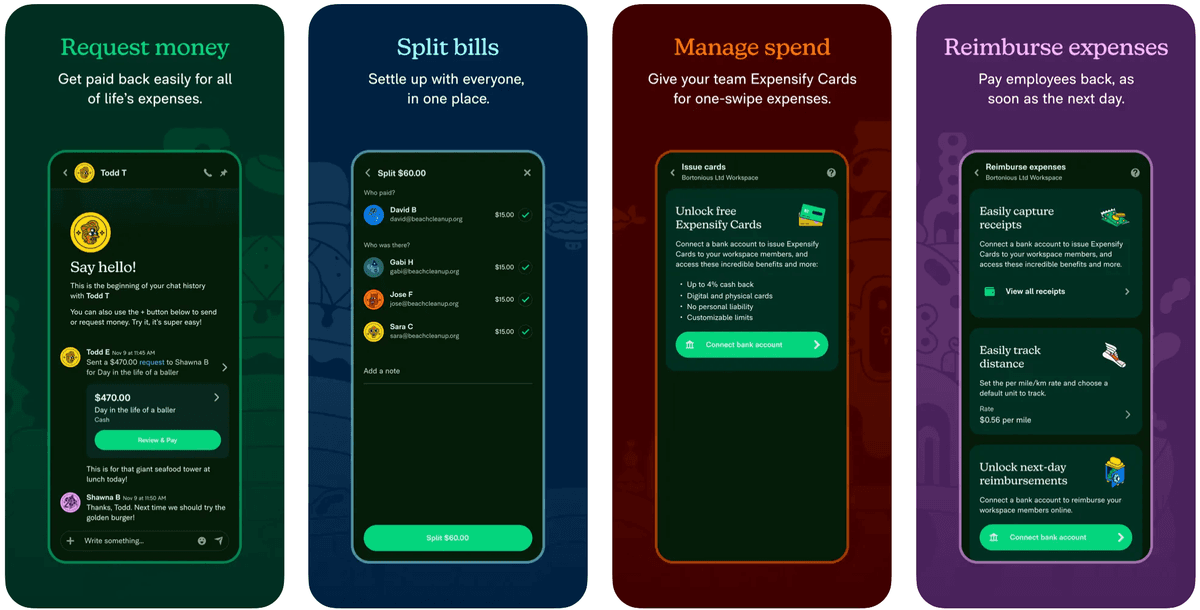
RAG consulting with me runs $10K–$50K: the low end covers auditing and fixing an underperforming retrieval pipeline, the high end covers designing and building a production RAG system with evaluation, citations, and permission-aware retrieval from scratch. I'm a Guest Engineer at Expensify and Top Rated on Upwork with $100K+ earned and verified client reviews, with 7+ years of production delivery behind the systems I ship. Engagements start with a short assessment of your documents and queries, and you get a written diagnosis with a fix plan before committing to a build.
Most RAG systems fail the same way: the demo answers ten rehearsed questions beautifully, then real users ask real questions and get confident nonsense. The difference between that and a system people trust is unglamorous retrieval engineering — chunking, hybrid search, evaluation, and permissions — which is exactly the work this service covers.
Weekly demos, async Slack updates, production standards.
04
Ship
Store launch, documentation, knowledge transfer.
Engagements this covers
The chatbot that lies about your own docs
A company shipped an internal assistant over their knowledge base, and employees stopped using it after it invented policy answers. I run an evaluation over real logged questions, trace failures to chunking that severed answers from context and retrieval that missed keyword-exact queries, rebuild the pipeline with hybrid search and citations, and re-score it. Trust returns because answers now show sources.
RAG as a product feature, built right the first time
A SaaS founder wants 'ask anything about your data' as a paid feature. I design the pipeline around their document types, build permission-aware retrieval so users can only surface content they're allowed to see, add an evaluation suite from realistic queries, and instrument per-query cost. The feature launches with accuracy numbers they can stand behind in sales calls.
Scaling past the naive pipeline
A team's prototype — embed everything, top-five cosine similarity, stuff the prompt — worked at a hundred documents and degrades at a hundred thousand. I introduce hybrid retrieval with reranking, metadata filtering to shrink the search space, and an index architecture that updates incrementally as documents change. Latency and answer quality both recover, and nightly reindexing stops being a bottleneck.
Where RAG projects actually fail
Nearly every failed RAG system I've audited broke at retrieval, not generation. Teams obsess over the model and prompt while the retriever feeds it the wrong passages — and no prompt engineering fixes a context window full of irrelevant text. The usual culprits, in order: chunking that splits documents arbitrarily so no chunk contains a complete thought; pure vector search missing exact identifiers like part numbers, names, and error codes that keyword search catches trivially; and no evaluation, so quality is judged by whoever tried three queries most recently.
The second failure tier is operational: indexes that go stale because updating them is manual, permissions bolted on after launch so the assistant leaks documents users shouldn't see, and per-query costs nobody measured until the invoice. My engagements attack retrieval quality first with measurement, because everything downstream depends on it.
What the engagement looks like
First, assessment: I take a sample of your documents and — critically — real user questions, and build a small evaluation set with known-correct answers. If you have an existing system, I score it against that set so we have a baseline number instead of vibes. This takes about a week and often reshapes the whole plan, because measured failure modes are rarely the suspected ones.
Then, the build or rebuild in two to five weeks: document processing tuned to your formats, chunking aligned to your content's structure, hybrid retrieval combining vector and keyword search with reranking, prompt assembly with citations, and the ingestion pipeline that keeps the index current automatically. Every change is scored against the evaluation set, so improvement is a number, not an opinion. Handover includes the eval harness itself — that's the tool that lets your team keep iterating safely after I leave.
What drives cost inside $10K–$50K
Document messiness is the biggest variable. Clean markdown and HTML are the easy case; scanned PDFs, tables that carry the actual answers, slide decks, and inconsistent legacy formats each need their own processing strategy, and extraction quality caps everything downstream. The second driver is permissions: if different users may see different documents, retrieval must enforce access control on every query, and that reshapes the architecture rather than adding a filter at the end.
Accuracy requirements set the third axis. An internal tool where a wrong answer costs a shrug can ship at the low end. A customer-facing system where wrong answers cost trust needs a bigger evaluation set, reranking, citation verification, and iteration cycles to push accuracy up — the difference between a $15K and a $40K engagement. Corpus size matters less than buyers expect; a million clean documents are easier than ten thousand messy ones.
How to evaluate a RAG consultant
One question separates practitioners from tourists: 'How will we know it's working?' The right answer describes an evaluation set built from real user queries, scored automatically, with a baseline before changes and a number after. Anyone whose quality story is 'we'll test it and see' will hand you a demo, not a system.
Ask what they'd try first for poor retrieval quality — you want to hear chunking review, hybrid search, and reranking before any mention of switching models or fine-tuning. Ask how they handle documents users aren't allowed to see; hesitation on that question disqualifies for any multi-user deployment. And ask when RAG is the wrong tool. A candidate who can't name cases where fine-tuning, a structured database query, or plain full-text search beats RAG hasn't seen enough deployments to know the boundaries of the technique they're selling.
When RAG is the wrong answer
If your users' questions are really structured queries — 'how many orders shipped last month', 'which customers are on the enterprise plan' — you need text-to-SQL or a reporting interface, not document retrieval; RAG over exported reports gives worse answers than the database already holds. If your corpus is small and stable, a few dozen pages of policy, stuffing it all into the prompt of a long-context model is simpler, cheaper, and more accurate than building retrieval infrastructure around it.
And if your documents are the problem — outdated, contradictory, wrong — RAG will faithfully retrieve and cite your bad content with total confidence. I've told buyers their real project was a documentation cleanup, not an AI system, and it saved them the budget. RAG earns its complexity when the corpus is large, changing, and genuinely useful; that's the honest checklist before spending anything on this page.
Low-risk to start
✓Fixed-scope proposal first
You approve milestones and a price before any build starts — no open-ended hourly surprises.
✓Working demos every week
You see running software each week, not status reports, so you can course-correct early.
✓One senior owner, no hand-offs
The person who scopes the work is the person who builds it — no junior layers, no agency markup.
✓A track record you can verify
Top Rated on Upwork with public client reviews and $100K+ earned, plus contributions to Expensify. Check the receipts before you commit.
A production RAG build typically costs $10K–$50K: auditing and fixing an existing pipeline sits at $10K–$20K, while a from-scratch system with hybrid retrieval, evaluation, citations, and permission-aware access lands at $25K–$50K. Ongoing costs — embeddings, model calls, and a vector store — usually run tens to hundreds of dollars monthly at internal-tool scale, and per-query cost instrumentation is part of the build.
How long does a RAG project take to reach production?
A focused audit-and-fix of an existing pipeline takes two to three weeks. A full build — document processing, hybrid retrieval, evaluation suite, citations, and automated index updates — typically takes four to seven weeks, with the first measurable accuracy numbers inside week two. The evaluation set gets built first precisely so progress is visible weekly rather than judged at the end.
Should I fine-tune a model or use RAG for my company knowledge base?
For knowledge that changes — policies, product docs, tickets — use RAG: updates take effect as soon as documents are re-indexed, and answers can cite sources, which fine-tuning can't do. Fine-tuning teaches a model style and format, not fresh facts, and retraining on every document change is impractical. The strongest systems sometimes combine them, but if you're choosing one for a knowledge base, RAG is almost always the right start.
How much does rag consulting typically cost?
Projects typically fall in the $10K–$50K range depending on scope, integrations, and timeline. I provide a fixed-scope proposal after a 30-minute scoping call.
How long does a rag consulting project take?
MVPs often ship in 8–12 weeks. Production systems with AI backends or RAG may run 12–20 weeks. Rescue and audit engagements can start within days.
Do you work with startups and enterprises?
Yes. I work with founders, CTOs, product teams, and agencies worldwide — US, UK, EU, and APAC time zones with async updates and weekly demos.
Can you own mobile and backend together?
Yes. I specialize in React Native + Python (FastAPI) + AI (RAG, agents, OpenAI/Claude) under one senior owner — fewer handoffs, faster shipping.
How do I get started?
Book a free 30-minute scoping call on this site, hire through Upwork, or email dhairyasenjaliya@gmail.com with your brief and timeline.