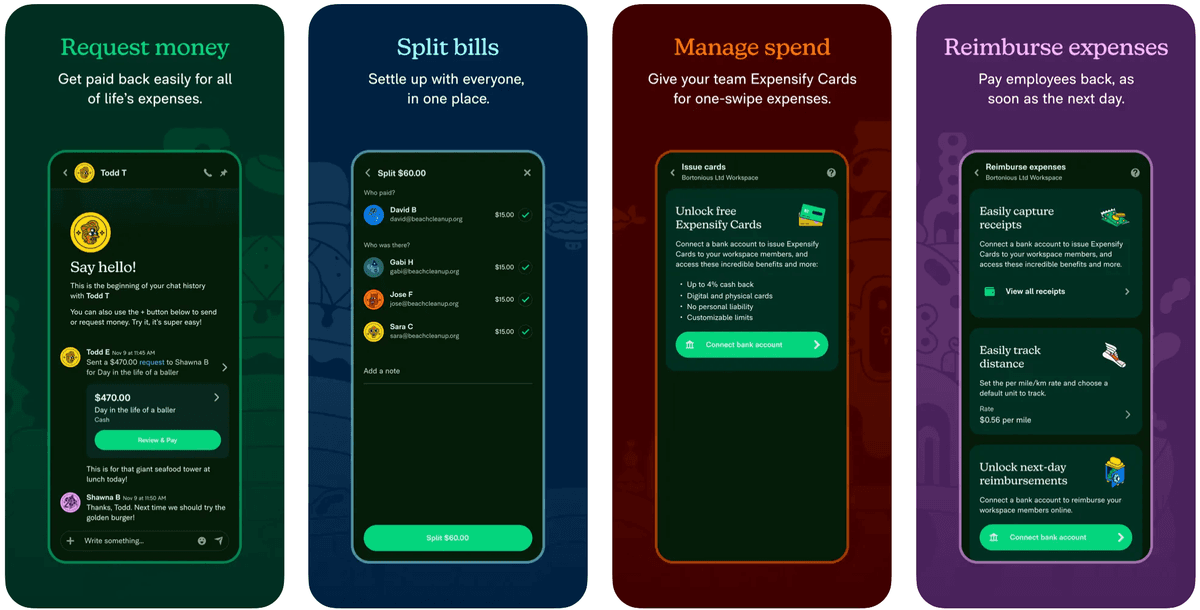
Hiring me as an AI agent developer runs $35K–$180K depending on scope: the low end covers a single production agent with tool access and an eval suite, the high end covers multi-agent systems with orchestration, guardrails, and ongoing iteration. I have 7+ years of production delivery, worked as a Guest Engineer at Expensify, and hold Top Rated status on Upwork with $100K+ earned and verified client reviews. The engagement starts with a scoping phase where I pressure-test whether you actually need an agent — sometimes a simpler pipeline wins, and I will say so.
Agents — LLMs that plan, call tools, and act over multiple steps — are the hardest kind of AI system to ship responsibly, because every added step multiplies the ways things can go wrong. The teams that succeed treat agent development as systems engineering with evals at the center, not prompt tinkering with a framework on top.
Weekly demos, async Slack updates, production standards.
04
Ship
Store launch, documentation, knowledge transfer.
Engagements this covers
Customer-facing agent with real account access
A SaaS company wants support automation that can actually do things — check subscription status, issue refunds within policy, update account settings — not just answer FAQs. I build the agent with tightly scoped tools, per-action permission limits, and an audit log of every call it makes. Refunds above a threshold escalate to a human; everything else resolves in one conversation.
Internal research agent over company knowledge
A team wastes hours digging answers out of wikis, tickets, and PDFs. I build an agent that searches across those sources, cross-references what it finds, and answers with citations back to the original documents. An eval set built from real employee questions gates every change, so answer quality is measured, not assumed, as the corpus and prompts evolve.
Rescuing an agent prototype that will not ship
A startup built an agent demo that impressed investors but loops, hallucinates tool arguments, and costs too much per run in real use. I audit the architecture, cut the tool set down to what the model handles reliably, add structured outputs and retries, and stand up an eval harness. The demo becomes a system with known failure rates you can put in front of customers.
What separates an agent developer from a prompt engineer
Anyone can wire an LLM to a framework and get a demo that works three times out of five. An agent developer is accountable for the other two. That means designing tool interfaces the model can actually use reliably — small, typed, hard to misuse — rather than exposing your whole API. It means structured outputs with validation, retry and fallback logic when the model returns garbage, and hard limits on loops, spend, and blast radius.
Most of all it means evals: a versioned test set of real tasks the agent must pass before any prompt, model, or tool change ships. When you interview any candidate for this work, ask how they would know the agent got worse after a change. If the answer does not involve a concrete eval process, you are hiring a prompt engineer at agent prices.
The engagement, phase by phase
Phase one is scoping and the honest question: does this task need an agent at all? Many workflows are better served by a fixed pipeline — cheaper, faster, deterministic. If an agent is justified, phase two builds the skeleton: tool definitions, the orchestration loop, structured output contracts, and a first eval set drawn from real tasks, usually two to four weeks.
Phase three is the long middle — iterating against the evals, discovering the failure modes production data always reveals, and adding guardrails: permission boundaries, spend caps, escalation paths to humans. Phase four hardens for launch with logging, tracing, and a rollout plan that starts with low-stakes traffic. A single production agent typically takes eight to twelve weeks end to end; multi-agent systems with several tool domains run four to eight months, which is what pushes engagements toward the top of the range.
What moves the price between $35K and $180K
The number of tools and the risk attached to them matter more than anything else. An agent that reads data is a different project from one that moves money, sends messages to customers, or modifies records — every write action needs permissioning, simulation or dry-run modes, and audit trails. Second: autonomy level. Human-approves-each-action is far cheaper to build safely than full autonomy, and I usually recommend starting there and earning autonomy with eval evidence.
Third: eval depth. A serious eval suite with graded rubrics and regression tracking is real engineering, but it is also the asset that lets you upgrade models and prompts for years without fear. Fourth: integration count and the quality of the APIs I am wiring into. Clean, documented APIs keep you near the bottom of the range; legacy systems without documentation do not.
Red flags when hiring for agent work
Be suspicious of portfolios that are all videos. Agent demos are trivially easy to cherry-pick; ask instead what percentage of tasks the agent completed successfully in production and how that was measured. Be suspicious of framework-first talk — someone whose main credential is knowing a particular agent framework has learned an abstraction, not the failure modes underneath it. Frameworks change quarterly; the engineering judgment does not.
Also watch for candidates who never mention cost. Agents make many model calls per task, and an agent that spends $4 to resolve a $6 support ticket is a business problem no accuracy number fixes. And walk away from anyone who promises full autonomy on a timeline measured in weeks for a high-stakes workflow. The honest ones talk about confidence thresholds, human escalation, and staged rollouts, because that is what production agents actually look like.
When you do not need an agent
If the workflow has a fixed sequence of steps, build a pipeline: call the model where you need language understanding, use plain code for everything else. It will be cheaper, faster, and debuggable. If the task is pure retrieval — find the answer in our documents — you need good search and a grounded answer step, not an agent that plans. If volume is low, the economics rarely work; agents carry ongoing eval and maintenance costs that need real usage to justify.
The test I apply in scoping: does the task genuinely require the system to decide what to do next based on what it just learned? If you can draw the flowchart in advance, you do not need an agent, and I will quote you the simpler build instead — usually at half the price.
Low-risk to start
✓Fixed-scope proposal first
You approve milestones and a price before any build starts — no open-ended hourly surprises.
✓Working demos every week
You see running software each week, not status reports, so you can course-correct early.
✓One senior owner, no hand-offs
The person who scopes the work is the person who builds it — no junior layers, no agency markup.
✓A track record you can verify
Top Rated on Upwork with public client reviews and $100K+ earned, plus contributions to Expensify. Check the receipts before you commit.
How much does it cost to hire an AI agent developer?
For a dedicated senior engagement, expect $35K–$70K for one production agent with a modest tool set, eval suite, and guardrails; $70K–$120K when the agent takes real-world actions like payments or account changes that demand permissioning and audit trails; and up to $180K for multi-agent systems built over several months. Hourly, senior agent developers typically bill $100–$200.
How long does it take to build a production AI agent?
Plan on eight to twelve weeks for a single agent: two to four weeks for scoping, tool design, and the orchestration skeleton, then the bulk of the time iterating against an eval suite and hardening guardrails before a staged rollout. A demo takes a weekend; the gap between demo and production is precisely what you are paying a senior developer to close.
Should I hire an agent developer or use an off-the-shelf agent platform?
Use a platform when your use case matches its template closely — generic support deflection, simple FAQ handling — and you can tolerate its limits. Hire a developer when the agent must use your internal tools, follow your policies, meet a measured accuracy bar, or take actions with real consequences. Many clients start on a platform, hit its ceiling within months, and then bring me in to build custom.
How much does hire ai agent developer typically cost?
Projects typically fall in the $35K–$180K range depending on scope, integrations, and timeline. I provide a fixed-scope proposal after a 30-minute scoping call.
How long does a hire ai agent developer project take?
MVPs often ship in 8–12 weeks. Production systems with AI backends or RAG may run 12–20 weeks. Rescue and audit engagements can start within days.
Do you work with startups and enterprises?
Yes. I work with founders, CTOs, product teams, and agencies worldwide — US, UK, EU, and APAC time zones with async updates and weekly demos.
Can you own mobile and backend together?
Yes. I specialize in React Native + Python (FastAPI) + AI (RAG, agents, OpenAI/Claude) under one senior owner — fewer handoffs, faster shipping.
How do I get started?
Book a free 30-minute scoping call on this site, hire through Upwork, or email dhairyasenjaliya@gmail.com with your brief and timeline.