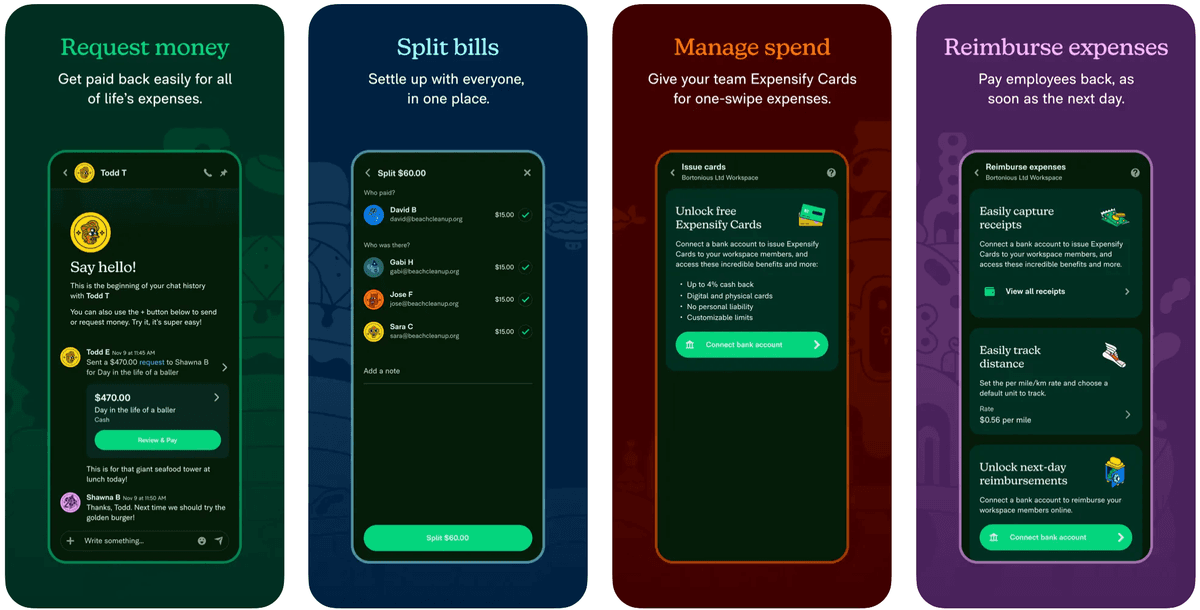
I offer Flask development as fixed-scope projects and ongoing retainers, with typical engagements between $15K and $80K depending on whether you need a focused API, a full backend with integrations and background processing, or the rescue of a Flask codebase that grew without structure. I bring 7+ years of production delivery, Guest Engineer experience at Expensify, and a Top Rated Upwork track record with $100K+ earned and verified client reviews. A well-scoped Flask API typically reaches a deployed first version in 3 to 5 weeks, with hardening and integrations filling out the remainder.
Flask is the backbone of an enormous amount of production Python — APIs, internal platforms, and the serving layer in front of ML models — precisely because it imposes so little. That freedom is also why Flask codebases diverge so sharply in quality: the framework won't stop anyone from building an unmaintainable system, so the structure has to come from the engineer.
Weekly demos, async Slack updates, production standards.
04
Ship
Store launch, documentation, knowledge transfer.
Engagements this covers
Python API serving an ML or AI feature
A team has a working model or LLM pipeline in notebooks and needs it behind a real API — authenticated, rate-limited, observable, and fast enough for product use. I build the Flask serving layer with request validation, queueing for slow inference, and latency monitoring per endpoint. Outcome shape: the data science work becomes a dependable product feature rather than a demo that falls over.
Flask app that grew into a monolith nobody can change
A five-year-old Flask application runs the business, but routes, queries, and business logic are tangled across giant files, and every change breaks something unrelated. I add characterization tests around critical paths first, then restructure into blueprints and a service layer incrementally, shipping to production throughout. Outcome shape: the same system, but changes take days instead of weeks.
Internal platform for operations teams
A company runs its operations on spreadsheets and email and needs an internal tool — dashboards, approval workflows, role-based access, exports. I build it in Flask with server-rendered views where that's fastest and API endpoints where interactivity matters, integrated with existing SSO. Outcome shape: an internal product employees adopt because it is faster than the spreadsheet it replaced.
Why Flask, and why that question matters to your budget
Flask's minimalism is a genuine advantage when your backend has unusual shape — heavy integration with Python's data and ML ecosystem, unconventional request flows, or a need to keep the dependency surface small and auditable. You choose every component deliberately, which means the system contains exactly what it needs. That's why so much ML serving infrastructure and so many internal platforms are Flask: the framework gets out of the way of the interesting parts.
The cost of that freedom is that Flask provides no guardrails, so project quality is entirely a function of the engineer's discipline. The application factory pattern, blueprints for modularity, a real migration workflow, config separated by environment — none of it is imposed, all of it is essential past toy scale. When you're comparing Flask quotes, you're really comparing whether the developer brings that structure by habit. The cheap bid that skips it produces the tangled monolith that becomes someone's expensive rescue project — often mine — three years later.
The shape of a Flask engagement
The first week establishes the skeleton: application factory, blueprint layout matching your domain, database models with migrations from day one, and a deployed environment with CI running the test suite on every change. I front-load this because Flask projects that start as a single file almost never escape that gravity — the structure has to exist before the features arrive.
Feature development then runs in weekly vertical slices, each delivering working endpoints with tests and documentation rather than layers that integrate at the end. For ML-serving projects, there's a dedicated performance phase: measuring inference latency under concurrent load, deciding what runs synchronously versus through a task queue, and setting up worker processes sized to your traffic. Every engagement ends with an operational handover — runbooks, monitoring dashboards, and a session with your team on the codebase's structure and conventions. The goal is that the next Python developer you hire is productive in their first week, because the code looks like standard well-structured Flask rather than one person's private idiom.
What moves a Flask project from $15K to $80K
The $15K–$25K tier is a focused API: one database, standard token auth, clean requirements, modest traffic. Most of the budget goes to business logic and tests, because the infrastructure needs are simple and well-trodden. The middle tier adds the things real products accumulate — third-party integrations with retry and reconciliation logic, background job processing, role-based permissions, file handling, admin interfaces — plus the staging and monitoring infrastructure to operate it all confidently.
The upper tier is driven by three factors. Concurrency-sensitive workloads — ML inference, long-running requests, high-throughput endpoints — require careful worker architecture and load testing, because Flask's synchronous default punishes naive deployment. Legacy rescue work prices by risk rather than size: restructuring a live system without downtime means characterization tests and staged migration. And compliance-adjacent domains — health data, financial records — add audit logging, access controls, and data handling requirements that touch every layer. Route count barely matters; five endpoints wrapping complex domain rules cost more than forty CRUD endpoints.
Red flags in Flask codebases and Flask developers
If you're evaluating an existing Flask codebase — yours or a vendor's sample — the tells are quick to check. Everything in one or two giant files past a few thousand lines. Database queries scattered through route handlers with no service layer. No migration history, meaning schema changes have been applied by hand. Config and secrets hardcoded rather than environment-driven. A requirements file with no version pins, so every fresh install is a lottery. Any two of these predict the rest.
For developers, ask three questions. How do you structure a Flask app past ten routes — the answer should include blueprints and an application factory without prompting. What happens when a request handler takes thirty seconds — anyone who has run Flask in production immediately talks about worker exhaustion and task queues. How do you test routes that touch the database — real answers involve fixtures and a test database, not mocking everything into meaninglessness. Fluency here is what separates engineers who have operated Flask from those who have completed tutorials with it.
When Flask is the wrong choice
If your product is a standard content-driven application — accounts, permissions, admin panels, CRUD over many models — Django ships in weeks what Flask makes you assemble by hand, and I'll recommend it when your requirements look like that. If your API is overwhelmingly async — thousands of concurrent connections, heavy streaming, WebSocket-first — a natively async Python framework fits better than retrofitting async onto Flask's synchronous core. The framework choice should follow the workload, and it costs nothing to get it right during scoping.
Flask earns its place when you want Python's ecosystem with minimal framework opinion: ML and LLM serving layers, integration services, internal platforms, and APIs whose shape doesn't match any framework's happy path. It's also often the pragmatic answer when you have an existing Flask system — a rescue and incremental restructure is usually far cheaper than the rewrite the team is tempted by. Rewrites discard years of encoded edge cases; restructures keep them. I've done both and will tell you honestly which your codebase needs.
Low-risk to start
✓Fixed-scope proposal first
You approve milestones and a price before any build starts — no open-ended hourly surprises.
✓Working demos every week
You see running software each week, not status reports, so you can course-correct early.
✓One senior owner, no hand-offs
The person who scopes the work is the person who builds it — no junior layers, no agency markup.
✓A track record you can verify
Top Rated on Upwork with public client reviews and $100K+ earned, plus contributions to Expensify. Check the receipts before you commit.
Typical Flask engagements run $15K to $80K. A focused API with standard auth and one database costs $15K–$25K. Full product backends with integrations, background jobs, and proper deployment land mid-range. ML serving layers with concurrency work, legacy rescues on live systems, and compliance-heavy domains reach the top. Complexity of business rules drives cost far more than the number of endpoints.
Is Flask still a good choice in 2026?
Yes, for the right workloads. Flask remains the pragmatic choice for ML and AI serving layers, internal platforms, and APIs that don't fit a batteries-included framework's assumptions — its minimal, stable core is a feature there. For standard content-heavy applications Django is faster to ship, and for massively concurrent async workloads a natively async framework fits better. The framework matters less than the structure the engineer brings.
Should I rewrite my legacy Flask app or refactor it?
Refactor, in almost every case. A working Flask system encodes years of edge cases that a rewrite silently discards — most rewrite projects rediscover them as production bugs. The reliable path is characterization tests around critical flows, then incremental restructuring into blueprints and a service layer while shipping continuously. Rewrites make sense only when the platform itself must change, such as moving to an async-first architecture.
How much does flask development services typically cost?
Projects typically fall in the $15K–$80K range depending on scope, integrations, and timeline. I provide a fixed-scope proposal after a 30-minute scoping call.
How long does a flask development services project take?
MVPs often ship in 8–12 weeks. Production systems with AI backends or RAG may run 12–20 weeks. Rescue and audit engagements can start within days.
Do you work with startups and enterprises?
Yes. I work with founders, CTOs, product teams, and agencies worldwide — US, UK, EU, and APAC time zones with async updates and weekly demos.
Can you own mobile and backend together?
Yes. I specialize in React Native + Python (FastAPI) + AI (RAG, agents, OpenAI/Claude) under one senior owner — fewer handoffs, faster shipping.
How do I get started?
Book a free 30-minute scoping call on this site, hire through Upwork, or email dhairyasenjaliya@gmail.com with your brief and timeline.