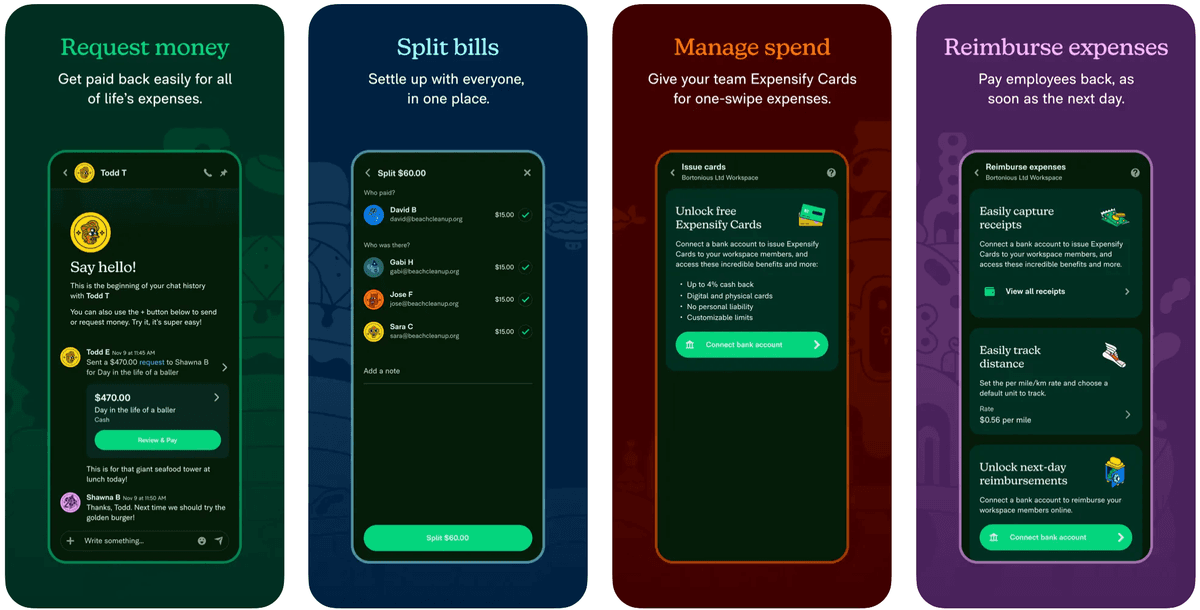
Enterprise Python development with me runs $50K–$200K: the low end covers building or hardening a single serious system — an API platform, a data pipeline — and the high end covers multi-system modernization across a legacy estate. I bring 7+ years of production delivery, experience as a Guest Engineer at Expensify, and Top Rated status on Upwork with $100K+ earned and verified client reviews. What you're buying isn't Python syntax; it's typed contracts, test coverage, observability, and deployment discipline on systems your business actually depends on.
Python is easy to write and hard to operate — which is exactly how companies end up with business-critical systems built like weekend scripts. This service turns Python that happens to work into Python your business can depend on: typed, tested, observable, and deployable by someone other than its original author.
Weekly demos, async Slack updates, production standards.
04
Ship
Store launch, documentation, knowledge transfer.
Engagements this covers
API platform over legacy systems
A company's data lives in aging internal systems that every new project integrates with painfully and differently. I build a typed FastAPI platform in front of them — consistent contracts, auth, versioning, rate limits — so internal teams stop re-solving the same integration. The outcome is one documented API surface and a measurable drop in time-to-integrate for new projects.
Modernizing an untyped legacy codebase
A revenue-critical Python codebase has no types, thin tests, and one remaining engineer who understands it. I modernize it incrementally — characterization tests first, then typing, CI, and dependency upgrades — with the system running in production the whole time. The outcome shape: the same behavior, now protected by types and tests, deployable by anyone on the team.
Hardening fragile data pipelines
Business reporting depends on a chain of cron jobs that fail silently and get fixed by hand every few weeks. I rebuild them as orchestrated pipelines with retries, idempotency, data-quality checks, and alerting that fires before stakeholders notice. The outcome is pipelines that recover from failure on their own and a runbook for the failures that still need humans.
What separates enterprise Python from scripts that work
The difference isn't cleverness — production Python is often boring by design. It's the operational layer: type hints checked in CI so refactoring is safe, tests that encode business rules instead of implementation details, structured logging and metrics so incidents are diagnosable at 2 a.m., pinned and audited dependencies, and deployment that doesn't require the original author's laptop.
Every one of those is unglamorous, and every one is missing from the codebases I get called to rescue. When you're evaluating this kind of work, ask about the operational layer first. Anyone can show you Python that runs; the expensive question is what happens in month eighteen when it breaks and its author is gone.
How the engagement runs week by week
Weeks one and two are an audit: I read the code, trace the data flows, interview the people who operate the system, and produce a written assessment with risks ranked by business impact — not a rewrite pitch, an honest map. That document alone has changed roadmaps.
From week three, delivery is incremental and always shippable: each two-week cycle lands typed, tested, deployed improvements to a live system rather than building a replacement in a parallel universe. Big-bang rewrites are where enterprise budgets go to die, so I don't do them. The engagement closes with knowledge transfer — documentation, runbooks, and pairing sessions with the engineers who'll own the system.
What drives cost within $50K–$200K
Legacy integration count is the biggest driver. A greenfield service with clean inputs sits near the bottom of the range; a system that must speak to five legacy databases, two vendor APIs from the 2000s, and an SFTP drop from a partner costs more, because every integration is an archaeology project with its own failure modes.
Compliance and migration risk are the other levers. Regulated data adds audit logging, access controls, and review cycles. And migrating live data with zero tolerance for downtime requires dual-write phases and reconciliation checks that a maintenance-window migration doesn't. When I quote the top of the range, it's almost always integrations and migration safety, not code volume.
Buying mistakes I see in enterprise Python
The classic mistake is treating Python as the easy language and staffing critical infrastructure with junior developers — the language forgives them right up until the system matters, and then the untyped, untested core becomes the most expensive part of the company to change. The second is approving a big-bang rewrite: eighteen months of parallel development, a terrifying cutover, and a new system that faithfully reproduces half the old bugs.
Third is hiring on algorithm puzzles. LeetCode performance tells you nothing about whether someone can refactor a live system safely. Ask candidates about migrations they've run, incidents they've handled, and how they'd add types to a moving codebase — those answers predict enterprise outcomes.
When not to modernize
If the system is scheduled for sunset within a year or two, don't modernize it — stabilize it. A thin monitoring layer, alerting on the known failure modes, and a runbook are a small investment; a modernization program for a dying system is money on fire, and I'll say so in the audit.
Similarly, if the pain is really about one integration or one report, a wrapper service in front of the legacy system often buys years of usable life for a fraction of the cost. Full modernization earns its price when the system is central to the business, changing frequently, and actively resisting every change — that combination, and only that combination, justifies the top of this range.
Low-risk to start
✓Fixed-scope proposal first
You approve milestones and a price before any build starts — no open-ended hourly surprises.
✓Working demos every week
You see running software each week, not status reports, so you can course-correct early.
✓One senior owner, no hand-offs
The person who scopes the work is the person who builds it — no junior layers, no agency markup.
✓A track record you can verify
Top Rated on Upwork with public client reviews and $100K+ earned, plus contributions to Expensify. Check the receipts before you commit.
Serious engagements run $50K–$200K. Building or hardening one system — an API platform, a data pipeline — with types, tests, observability, and deployment automation sits at $50K–$90K. Multi-system modernization, heavy legacy integration, regulated-data requirements, and zero-downtime migrations push toward $200K. Beware of quotes far below this range for business-critical systems; they usually price the code and omit the operational work that makes it dependable.
Should we rewrite our legacy Python system or refactor it?
Refactor incrementally in almost every case. Big-bang rewrites take twice as long as estimated, freeze feature work, and reproduce old bugs in new code. The incremental path — characterization tests, then types, then CI, then targeted restructuring — keeps the system live and shippable throughout. The rare rewrite cases are when the platform underneath is dead or the system is small enough to replace in weeks, not quarters.
Is Python fast enough for enterprise workloads?
For almost all enterprise workloads, yes — the bottleneck is nearly always the database, the network, or unoptimized queries, not the language. Typed Python with async frameworks handles serious API traffic, and the numeric stack pushes heavy computation into compiled code anyway. The honest exceptions are hard-real-time systems and extreme low-latency paths. If profiling ever shows Python itself as your bottleneck, that's a good problem arriving years after launch.
How much does enterprise python development typically cost?
Projects typically fall in the $50K–$200K range depending on scope, integrations, and timeline. I provide a fixed-scope proposal after a 30-minute scoping call.
How long does a enterprise python development project take?
MVPs often ship in 8–12 weeks. Production systems with AI backends or RAG may run 12–20 weeks. Rescue and audit engagements can start within days.
Do you work with startups and enterprises?
Yes. I work with founders, CTOs, product teams, and agencies worldwide — US, UK, EU, and APAC time zones with async updates and weekly demos.
Can you own mobile and backend together?
Yes. I specialize in React Native + Python (FastAPI) + AI (RAG, agents, OpenAI/Claude) under one senior owner — fewer handoffs, faster shipping.
How do I get started?
Book a free 30-minute scoping call on this site, hire through Upwork, or email dhairyasenjaliya@gmail.com with your brief and timeline.