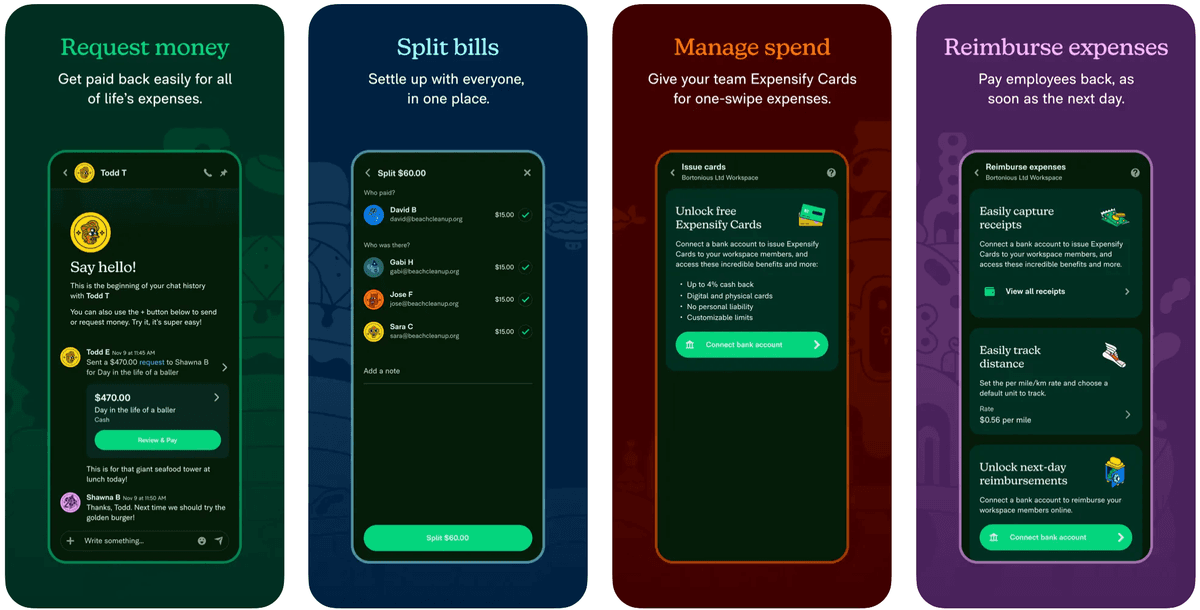
You can hire me to design and build production AI agents — LLM systems that use tools, memory, and guardrails to complete real work — with engagements typically running $30K–$150K depending on how many workflows the agent owns and how much reliability engineering the domain demands. I bring 7+ years of production delivery, I've worked as a Guest Engineer at Expensify, and I'm Top Rated on Upwork with $100K+ earned and verified client reviews. Most projects start with a two-week paid discovery that produces a working prototype and an eval harness, so you know the agent is viable before committing the full budget. From there we build toward a staged rollout with tracing, cost dashboards, and human escalation built in from day one.
Most AI agent projects die not because the model is weak but because nobody engineered the loop around it: tool contracts, failure recovery, evaluation, and human escalation. This service takes an agent from a promising demo to something you can put in front of customers without watching it every minute — and the difference between those two states is almost entirely engineering, not prompting.
Weekly demos, async Slack updates, production standards.
04
Ship
Store launch, documentation, knowledge transfer.
Engagements this covers
Support agent that resolves, not deflects
A SaaS company's ticket queue is growing faster than the support team. I build an agent that pulls account context through tools, executes resolutions for the top recurring intents — refunds, plan changes, config fixes — and escalates anything ambiguous with a full summary attached. The outcome is a measurable resolution rate on the easy tail, with humans focused on the hard cases.
Internal operations agent
An ops team spends hours daily shuttling data between a CRM, a billing system, and spreadsheets, following a written runbook. I encode that runbook as an agent with typed tool calls, approval gates on anything irreversible, and a full audit log per run. The team reviews exceptions instead of executing steps, and the runbook stops rotting in a wiki.
Agent feature inside your product
A product team wants users to accomplish multi-step jobs — build a report, configure a workflow, triage a queue — by asking for them. I design the tool surface your product exposes to the model, build the agent loop with streaming feedback, and ship it behind a feature flag with per-user cost caps and evals wired into CI so regressions get caught before users do.
What the engagement looks like week by week
Weeks one and two are discovery: I map the workflow the agent will own, define every tool it needs with typed inputs and outputs, and build a golden set of 30–100 real tasks with known-good outcomes. That golden set is the most important artifact of the whole project — it turns every later argument about quality into a measurement.
Weeks three to five produce a working prototype: the agent loop running against real tools in a sandboxed environment, scored against the golden set after every change. Weeks six to ten are hardening — retries and idempotency on tool calls, permission boundaries, cost ceilings per run, tracing, and the human escalation path. The final stretch is a staged rollout: shadow mode first, where the agent proposes actions humans review, then limited autonomy on the intents where eval scores justify it. You get handoff documentation and a runbook, not just code.
What actually drives cost inside $30K–$150K
Four variables move the number. First, the tool surface: an agent with three read-only tools is a fraction of the work of one with twelve tools that mutate customer data. Second, the cost of being wrong: an agent drafting internal summaries needs far less hardening than one issuing refunds, and hardening is where hours go. Third, autonomy level — human-approves-everything is cheap; agent-acts-alone requires an eval and guardrail investment that dominates the budget. Fourth, data sensitivity: PII, healthcare, or financial data adds permissioning, redaction, and audit requirements.
The honest guidance: a single-workflow internal agent with approval gates lands near the bottom of the range. A customer-facing agent with write access to production systems and real autonomy lands at the top, and most of that spend is reliability work you cannot skip.
Where agent projects die
The most common failure is demo-first development: a founder sees the agent nail five hand-picked examples, greenlights launch, and discovers the 20% failure rate in front of customers. Without an eval set, you have no idea what your failure rate is — you only know your demo rate.
The second killer is unbounded scope. 'An agent that handles all our support' is not a buildable spec; 'an agent that handles refund requests under $200' is. Agents earn autonomy one narrow intent at a time. Third: no escalation path, so every failure becomes a dead end instead of a handoff. Fourth: nobody owns the agent after launch. Models drift, tools change, new edge cases appear — an agent without an owner degrades quietly for months before someone notices the numbers.
How to evaluate anyone you hire for this
Ask three questions. First: 'How will we measure whether the agent is good?' The only acceptable answer involves a task-level eval set built from your real data, run automatically on every change. Anyone who says 'we'll test it as we go' is going to ship you a demo. Second: 'What happens when a tool call fails halfway through a run?' You're listening for retries, idempotency, and partial-state recovery — concrete mechanics, not reassurance. Third: 'What would you cut from my idea?' A senior builder will immediately narrow your scope; a vendor optimizing for contract size will accept all of it.
The strongest red flag is anyone promising full autonomy from day one. Real agent systems earn autonomy incrementally, intent by intent, with humans reviewing the frontier. That's not caution theater — it's how every production deployment I've seen actually works.
What production-grade delivery includes
When I hand off an agent, you get the loop itself plus everything required to operate it. Every run is traced end to end — each model call, each tool invocation, each decision — so when something goes wrong you can replay exactly what happened instead of guessing. The eval suite runs in CI, so a prompt tweak or model upgrade that regresses quality fails the build before it ships. Cost is a first-class metric: per-run and per-user dashboards with hard caps, because agent loops can spend money in ways a single API call never will.
You also get guardrails as code — input validation, output schemas, permission boundaries per tool — a documented escalation path, a rollback plan, and a runbook your team can operate without me. If a proposal doesn't mention observability and evals, you're buying a demo with a deadline.
When you should not build an agent
If the workflow is deterministic — same inputs, same steps, same outputs every time — write normal code. It will be cheaper, faster, and it will never hallucinate. Agents are for workflows with genuine ambiguity: variable inputs, judgment calls, natural-language interfaces. Second, if a single well-designed prompt call solves the task, you don't need an agent loop, and I'll tell you that in discovery rather than build one anyway.
Third, if you can't give the agent data access — no API, no clean export, everything locked in a legacy system — fix the data access first; an agent with no tools is just a chatbot. And if task volume is low, the engineering doesn't pay back: an agent that saves two hours a week has no business costing $60K. In roughly a third of agent inquiries I take, the right answer is a smaller build or none at all.
Low-risk to start
✓Fixed-scope proposal first
You approve milestones and a price before any build starts — no open-ended hourly surprises.
✓Working demos every week
You see running software each week, not status reports, so you can course-correct early.
✓One senior owner, no hand-offs
The person who scopes the work is the person who builds it — no junior layers, no agency markup.
✓A track record you can verify
Top Rated on Upwork with public client reviews and $100K+ earned, plus contributions to Expensify. Check the receipts before you commit.
Production AI agent development typically runs $30K–$150K. A single internal workflow with human approval gates lands near $30K–$50K; a customer-facing agent with write access to production systems, deep evals, and staged autonomy lands at $100K+. The main cost drivers are the number of tool integrations, the cost of the agent being wrong, and how much autonomy you need — not the model itself, which is a rounding error by comparison.
How long does it take to build a production AI agent?
A realistic timeline is 8–14 weeks: two weeks of discovery and eval-set construction, three weeks to a working prototype against real tools, four to six weeks of hardening and guardrails, then a staged rollout starting in shadow mode. Teams that promise a production agent in three weeks are describing a demo. The prototype is fast; the reliability engineering that makes it deployable is most of the calendar.
Should I build a custom AI agent or use an off-the-shelf tool?
Use off-the-shelf when your workflow matches what the tool was built for — generic support deflection, meeting notes, sales outreach. Build custom when the agent needs your proprietary tools and data, when its actions touch your production systems, or when the workflow is your competitive advantage. A useful test: if you can't get the off-the-shelf tool past your security review anyway, custom was your only real option.
How much does ai agent development services typically cost?
Projects typically fall in the $30K–$150K range depending on scope, integrations, and timeline. I provide a fixed-scope proposal after a 30-minute scoping call.
How long does a ai agent development services project take?
MVPs often ship in 8–12 weeks. Production systems with AI backends or RAG may run 12–20 weeks. Rescue and audit engagements can start within days.
Do you work with startups and enterprises?
Yes. I work with founders, CTOs, product teams, and agencies worldwide — US, UK, EU, and APAC time zones with async updates and weekly demos.
Can you own mobile and backend together?
Yes. I specialize in React Native + Python (FastAPI) + AI (RAG, agents, OpenAI/Claude) under one senior owner — fewer handoffs, faster shipping.
How do I get started?
Book a free 30-minute scoping call on this site, hire through Upwork, or email dhairyasenjaliya@gmail.com with your brief and timeline.