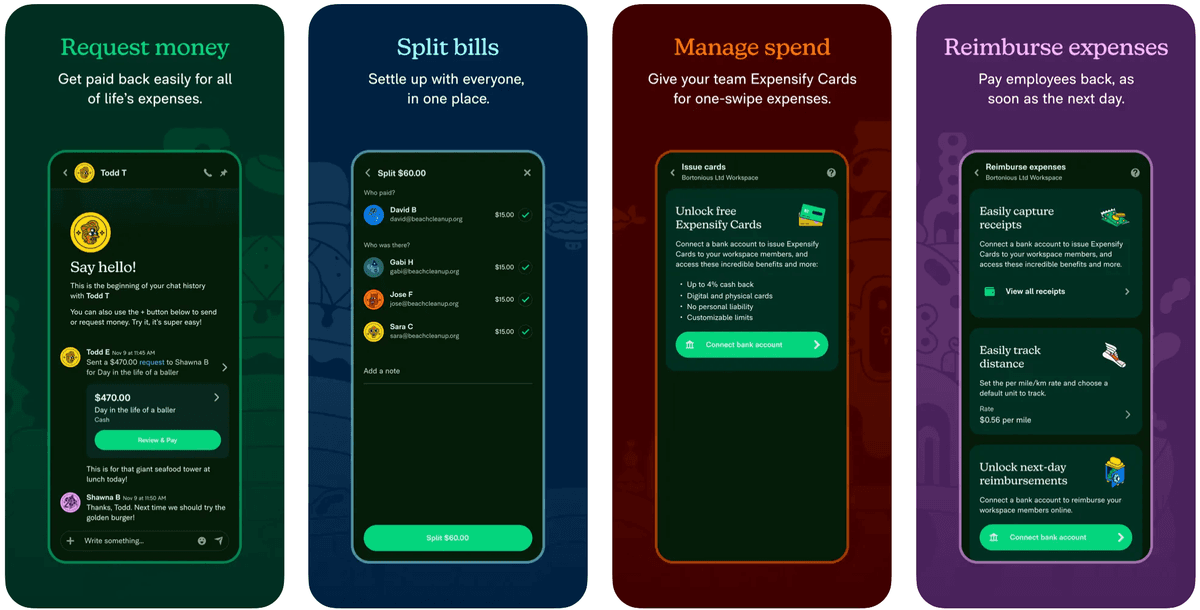
Autonomous agent development — building agents that run unattended on schedules, events, or queues rather than waiting for a human prompt — typically costs $35K–$150K. I design and ship these systems personally, drawing on 7+ years of production delivery, experience as a Guest Engineer at Expensify, and apps used by millions of users, so the operational discipline is built in from day one. The engagement starts by fixing the autonomy level: what the agent may do alone, what it must queue for approval, and how it gets stopped. Pricing is milestone-based, with the first milestone always a supervised pilot before anything runs unattended.
The gap between an agent that works when you watch it and one you trust at 3 a.m. is the entire discipline of autonomous agent development. Unattended agents need containment, monitoring, and recovery paths that chat-style AI never does, because nobody is there to notice when they go wrong. Delivery succeeds when autonomy is granted gradually against evidence, not assumed on day one.
Weekly demos, async Slack updates, production standards.
04
Ship
Store launch, documentation, knowledge transfer.
Engagements this covers
Overnight data operations agent
A company's nightly data ingestion breaks in creative ways — malformed files, schema drift, partner API changes — and an engineer triages it every morning. I build an agent that detects the failure class, applies known remediations, re-runs the pipeline, and files a precise report for anything it could not fix. Morning triage drops from hours to minutes of review.
Inbound lead qualification agent
Leads arrive around the clock through forms and email, and by the time a human responds, half have gone cold. I build an agent that enriches each lead, scores it against the ICP, drafts the first response, and books qualified prospects directly into the calendar — with every action logged and a daily digest for the sales lead.
Engineering triage agent
An engineering team's alert channel is noise nobody reads. I build an agent that watches alerts and error trackers, deduplicates, pulls recent deploy context, drafts an incident summary with a suspected cause, and pages a human only above a severity threshold. On-call engineers start their investigation from a briefing instead of a wall of red.
The autonomy ladder, and why you climb it slowly
Every autonomous agent I ship moves through the same four rungs. Rung one: the agent runs but only records what it would have done — a shadow mode that costs nothing when wrong. Rung two: it proposes actions into a human review queue. Rung three: it executes reversible actions alone and queues irreversible ones. Rung four: full autonomy within hard limits, with sampling-based human review.
Each promotion happens only when the data from the previous rung earns it — measured accuracy over hundreds of real runs, not a good week of demos. Companies that skip rungs are the ones that end up with an agent emailing customers nonsense or deleting records at scale. The ladder is not caution theater; it is the cheapest possible way to discover failure modes, because you find them while they are still free.
What the engagement looks like week by week
Weeks one and two: I instrument the workflow as it runs today and build the eval set from real historical cases — the agent's exam, written before the agent. Weeks three to five: core build in shadow mode, where the agent processes live inputs but only logs intended actions, letting us measure accuracy against reality at zero risk.
Weeks six to eight: promotion to the review-queue stage, plus the operational layer — dashboards, per-run cost tracking, anomaly alerts, and a kill switch that halts the agent instantly. The final stretch is the supervised pilot and handoff: your team learns to read the dashboards, tune thresholds, and extend the eval suite. Engagements at the upper end of $35K–$150K usually mean multiple workflows or integrations with strict compliance requirements, not a fancier agent.
What moves cost inside $35K–$150K
Blast radius is the biggest driver. An agent whose worst-case action is an incorrect internal report is cheap to make safe; one that touches customer communication, money, or production data needs layered guardrails, staged rollouts, and much deeper eval coverage — that difference alone can double the budget. The second driver is integration count: every system the agent reads or writes needs a typed contract, scoped credentials, and failure handling.
The third is run volume and variance. An agent handling fifty predictable cases a day is a smaller problem than one handling five thousand messy ones, because the long tail of weird inputs is where the engineering time goes. Model choice and token spend, which buyers often fixate on, are typically under ten percent of total cost of ownership.
Guardrails, monitoring, and the kill switch
Good autonomous delivery is recognizable by its boring operational surface. Every run is logged end to end and replayable: what the agent saw, what it decided, what it did, what it cost. Hard limits live outside the agent's reasoning — rate caps, spend caps, allowed-action lists enforced by code the LLM cannot talk its way around. Anomaly detection watches for behavioral drift: a spike in actions per run or cost per task pauses the agent before a human even looks.
And there is always a kill switch that any stakeholder can hit without engineering help. If a vendor's delivery plan does not mention monitoring and shutdown until you ask, they are building you a demo that happens to run on a schedule, and you will discover the difference at the worst possible time.
Mistakes companies make buying autonomous agents
The first mistake is buying autonomy as a binary — assuming the agent either works unattended or it does not, and pushing vendors to promise full autonomy in the proposal. That pressure selects for vendors willing to lie. The second is skipping shadow mode to save two weeks; those two weeks are the cheapest failure-discovery you will ever buy, and skipping them moves the discovery into production.
The third is ignoring the handoff. An autonomous agent is an operational system, like a service in your infrastructure — someone on your team must own its dashboards, review queues, and thresholds. Buyers who treat it as fire-and-forget software call the vendor back in a panic three months later. Ask every candidate how your team will operate the agent without them; a weak answer there predicts the whole engagement.
When a human-in-the-loop tool is the better buy
Full autonomy is a cost you should only pay when the volume or the timing demands it — thousands of runs a day, or work that must happen at 3 a.m. If a human will review the output anyway, stop at the review-queue rung: you get most of the labor savings at perhaps sixty percent of the budget and a fraction of the risk, because the approval step is your guardrail.
Skip autonomous agents entirely when errors are catastrophic and unrecoverable, when volume is low enough that a person handles it in an hour a day, or when the underlying workflow is still changing weekly — automating a moving target wastes everyone's money. I would rather scope you a smaller assisted system that works than a fully autonomous one you will end up switching off.
Low-risk to start
✓Fixed-scope proposal first
You approve milestones and a price before any build starts — no open-ended hourly surprises.
✓Working demos every week
You see running software each week, not status reports, so you can course-correct early.
✓One senior owner, no hand-offs
The person who scopes the work is the person who builds it — no junior layers, no agency markup.
✓A track record you can verify
Top Rated on Upwork with public client reviews and $100K+ earned, plus contributions to Expensify. Check the receipts before you commit.
How much does it cost to build an autonomous AI agent?
Production-grade builds run $35K–$150K. The low end covers a single workflow with reversible actions and a human review queue; the high end covers agents acting alone across several systems, with compliance requirements and deep monitoring. The main cost driver is blast radius — what a wrong action can damage — not the sophistication of the model. Quotes under this range almost always omit shadow-mode testing and operational tooling.
How long before an agent can safely run unattended?
Plan for ten to fourteen weeks to genuine unattended operation: two weeks of scoping and eval design, three in shadow mode measuring accuracy on live inputs, three in a human-review stage, then a supervised pilot before full autonomy. The calendar time is mostly evidence-gathering, not coding. Vendors promising unattended operation in under a month are skipping the stages that catch failures while they are still free.
Should my agent be fully autonomous or keep a human in the loop?
Default to human-in-the-loop and let the data argue for autonomy. If the agent proposes actions and humans approve them, you capture most of the value with a built-in guardrail. Promote to full autonomy only for action types where months of review data show near-perfect accuracy, where actions are reversible, or where volume makes review impractical. Autonomy is a privilege the agent earns per action type, not a launch setting.
How much does autonomous agent development typically cost?
Projects typically fall in the $35K–$150K range depending on scope, integrations, and timeline. I provide a fixed-scope proposal after a 30-minute scoping call.
How long does a autonomous agent development project take?
MVPs often ship in 8–12 weeks. Production systems with AI backends or RAG may run 12–20 weeks. Rescue and audit engagements can start within days.
Do you work with startups and enterprises?
Yes. I work with founders, CTOs, product teams, and agencies worldwide — US, UK, EU, and APAC time zones with async updates and weekly demos.
Can you own mobile and backend together?
Yes. I specialize in React Native + Python (FastAPI) + AI (RAG, agents, OpenAI/Claude) under one senior owner — fewer handoffs, faster shipping.
How do I get started?
Book a free 30-minute scoping call on this site, hire through Upwork, or email dhairyasenjaliya@gmail.com with your brief and timeline.