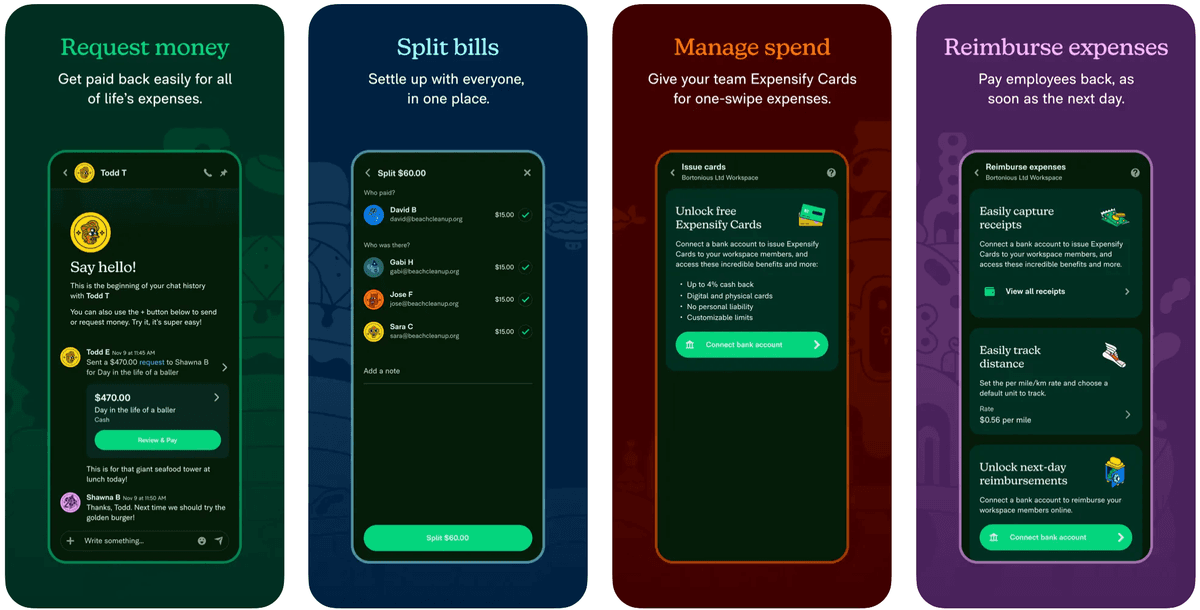
Hiring me to build an AI SaaS product typically costs $40K–$200K, depending on whether you need a focused single-workflow product or a multi-tenant platform with agentic features, billing, and admin tooling. I bring 7+ years of production delivery, worked as a Guest Engineer at Expensify, and have shipped apps used by millions of users — so you get one senior engineer accountable for the whole stack, not a rotating agency bench. Every engagement starts with a paid scoping sprint that produces a fixed roadmap and a firm number before you commit to the full build.
Most AI SaaS projects fail between the demo and the invoice: the prototype impresses investors, then collapses under real users, real data, and real inference bills. This service takes an AI product from idea or prototype to something customers pay for — with the unit economics, evaluation, and multi-tenancy questions answered before they become emergencies.
Weekly demos, async Slack updates, production standards.
04
Ship
Store launch, documentation, knowledge transfer.
Engagements this covers
Founder with a validated idea and no engineering team
You have customer conversations, maybe a waitlist, and a clear picture of the workflow your product automates — but nobody to build it. I take it from specification to a deployed SaaS: auth, billing, the core AI workflow, and an admin view. You end with paying-customer-ready software, infrastructure in your own accounts, and documentation a future hire can inherit.
Existing SaaS adding an AI product line
Your product works, your customers are asking for AI features, and your team is busy keeping the lights on. I integrate LLM-powered capabilities into your existing stack behind feature flags, instrument cost and quality per request, and hand your team an evaluation harness — so the AI tier launches as a measured bet, not a leap of faith.
Prototype that needs to become a product
Someone built a demo — a notebook, a Streamlit app, a weekend wrapper around a model API — and it convinced everyone. Now it needs tenancy, rate limits, guardrails, and a real frontend. I rebuild it as production software while preserving what the prototype proved, usually reusing the prompts and discarding the plumbing. The outcome is a system that survives its hundredth concurrent user.
What separates a $40K build from a $200K build
The low end of the range buys a focused product: one core AI workflow, standard authentication, Stripe billing, a straightforward data model, and a clean web app. That is genuinely enough for many first launches, and I will tell you if it is enough for yours.
The budget climbs with four things. Multi-tenancy done properly — org-level permissions, data isolation, per-tenant configuration — adds weeks of careful data modeling. Agentic features, where the AI takes multi-step actions instead of producing one answer, multiply the testing surface. Integrations with third-party systems each bring their own auth, rate limits, and failure modes. And compliance requirements — SOC 2 preparation, audit logging, data residency — shape architecture from day one. None of these are padding; each is a decision we make together against your actual sales pipeline, not against a feature wishlist.
How the engagement runs, week by week
Weeks one and two are a paid scoping sprint: I map the product, define the core workflow, pick the stack, and produce a walking skeleton — deployed, authenticated, talking to a model, doing almost nothing. That skeleton kills most integration risk while changes are still cheap.
Weeks three through eight build the revenue path: the AI workflow your customers pay for, the data model beneath it, and billing. Only after that core works end to end do we add surrounding features — onboarding, admin tooling, notifications. The final stretch is hardening: an evaluation suite for the AI layer, load and cost testing, error budgets, and launch. You see deployed software every week from week two onward; if what you are seeing ever diverges from what you imagined, we catch it in days, not months.
The AI layer is the cheapest line item and the biggest risk
In a typical AI SaaS budget, the model integration itself is a small fraction of the work — the API calls are trivial. What is expensive is making the AI trustworthy: an evaluation set built from realistic inputs, regression tests that run on every prompt change, fallbacks for model outages, structured outputs your database can rely on, and cost ceilings so a single user cannot burn your margin.
Most budgets I review underweight this by an order of magnitude. Teams spend months polishing UI around an AI feature nobody has measured. I flip that: evaluation harness before feature polish, because a beautiful interface wrapped around wrong answers is a churn machine. Inference cost modeling happens in scoping, not after the first alarming invoice — you should know your gross margin per request before you set pricing.
Mistakes companies make when buying AI SaaS development
The most common mistake is hiring for the wrong layer: a machine-learning researcher for what is fundamentally a product engineering job, or a web agency that has never operated an LLM feature in production. AI SaaS lives at the intersection — you need someone who has shipped both.
The second mistake is buying a fixed-price monolith: twelve months of spec written up front, delivery at the end, and no working software in between is how six-figure budgets produce demos. The third is ignoring unit economics until launch — if you do not know what a customer costs you in inference, you cannot price, and repricing after launch is a churn event. Finally, beware anyone who will not show you a production system they built and cannot explain what broke in it. Production scars are the credential that matters in this category.
When you should not hire me for this
If you have not talked to prospective customers, do not commission an AI SaaS build — spend a fraction of this budget validating demand first, or start with an MVP engagement scoped to answer one question. If your product's core risk is a novel model or research problem rather than product execution, you need an ML research engineer, and I will say so in the first call.
And if your budget is genuinely under $40K, the honest move is to scope down: a single LLM-powered feature inside an existing product, or a thin pilot for one design partner, delivers more learning per dollar than a compressed, corner-cut SaaS. I turn down builds where the budget and the ambition cannot meet, because a half-built platform serves nobody — including my references.
Low-risk to start
✓Fixed-scope proposal first
You approve milestones and a price before any build starts — no open-ended hourly surprises.
✓Working demos every week
You see running software each week, not status reports, so you can course-correct early.
✓One senior owner, no hand-offs
The person who scopes the work is the person who builds it — no junior layers, no agency markup.
✓A track record you can verify
Top Rated on Upwork with public client reviews and $100K+ earned, plus contributions to Expensify. Check the receipts before you commit.
How much does it cost to build an AI SaaS product?
With me, $40K–$200K. A focused product — one AI workflow, auth, billing, a single web app — sits near the low end. Multi-tenancy, agentic features, third-party integrations, and compliance requirements push toward the high end. The first scoping sprint produces a fixed roadmap and a firm number, so the range narrows to a real figure before you commit serious money.
How long does it take to build an AI SaaS from scratch?
A revenue-ready first version typically takes 10 to 16 weeks: two weeks of scoping and skeleton, six weeks on the core paid workflow, and the remainder on hardening, evaluation, and launch. Timelines stretch when integrations or compliance enter the picture. You will see deployed, working software every week from week two — if you are not, something is wrong.
Should I hire an agency or a solo senior engineer for an AI SaaS build?
An agency makes sense when you need five people working in parallel or ongoing managed capacity. A senior solo engineer makes sense when the product fits in one person's head — most pre-launch AI SaaS does — because you get direct communication, no junior hand-offs, and one accountable owner. My Guest Engineer work at Expensify and 7+ years of delivery are the kind of track record to demand from either.
How much does ai saas development typically cost?
Projects typically fall in the $40K–$200K range depending on scope, integrations, and timeline. I provide a fixed-scope proposal after a 30-minute scoping call.
How long does a ai saas development project take?
MVPs often ship in 8–12 weeks. Production systems with AI backends or RAG may run 12–20 weeks. Rescue and audit engagements can start within days.
Do you work with startups and enterprises?
Yes. I work with founders, CTOs, product teams, and agencies worldwide — US, UK, EU, and APAC time zones with async updates and weekly demos.
Can you own mobile and backend together?
Yes. I specialize in React Native + Python (FastAPI) + AI (RAG, agents, OpenAI/Claude) under one senior owner — fewer handoffs, faster shipping.
How do I get started?
Book a free 30-minute scoping call on this site, hire through Upwork, or email dhairyasenjaliya@gmail.com with your brief and timeline.