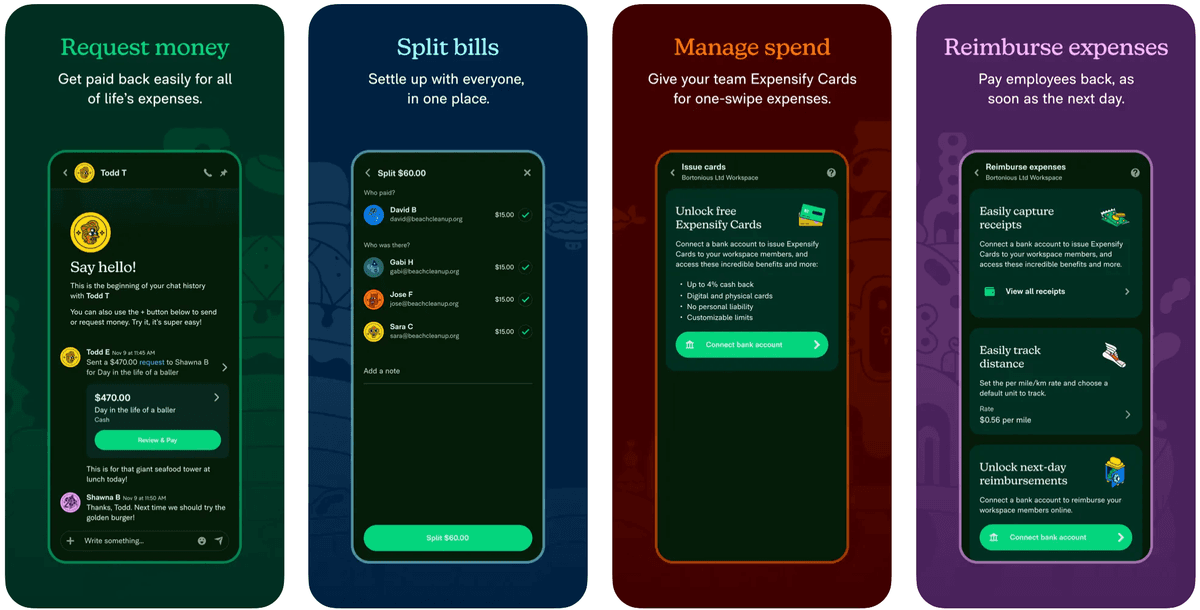
Hiring me for AI integration typically costs $15K–$90K: a single LLM-powered feature inside an existing product sits at the low end, while multi-model pipelines with evaluation suites, fallbacks, and cost controls land at the top. I'm Top Rated on Upwork with $100K+ earned and verified client reviews, I've worked as a Guest Engineer at Expensify, and I bring 7+ years of production delivery. Every engagement starts with a short scoping sprint that produces a fixed estimate and an evaluation dataset before you commit to the full build.
Most AI integrations stall at demo quality — a prompt-driven prototype that impresses in a meeting and falls apart on real user input. This service exists to close that gap: treating AI integration as engineering, with measured accuracy, cost ceilings, and failure handling, rather than prompt tinkering that nobody can debug six months later.
Weekly demos, async Slack updates, production standards.
04
Ship
Store launch, documentation, knowledge transfer.
Engagements this covers
Adding an AI assistant to an existing SaaS
A B2B product team wants an in-app assistant that answers questions using the customer's own data. I build the retrieval layer, tool calling against existing APIs, streaming UI, and guardrails against off-topic or leaked answers. The outcome is an assistant that cites its sources, with a known cost per conversation and an eval suite the team can extend.
Replacing a manual workflow with LLM extraction
An operations team keys data by hand from PDFs, emails, or forms. I build a structured extraction pipeline with schema validation and confidence scoring, routing low-confidence items to human review. The outcome shape: the majority of documents processed automatically, humans only touching genuine exceptions, and an audit trail for every field the model filled in.
Rescuing a stalled AI prototype
An internal team shipped a demo that leadership loved, but it hallucinates in production and nobody can explain why. I add an evaluation harness, prompt versioning, fallback models, and request-level observability. The outcome is a feature with measured accuracy on a golden dataset — and a clear number for whether it is good enough to ship.
What the engagement looks like week by week
Week one is scoping: I map your data, define what a correct answer looks like, and build a golden dataset of 50–200 real examples with expected outputs. That dataset is the contract for the whole project — without it, nobody can say whether the integration works.
Weeks two through four cover the core pipeline: model selection, retrieval or tool wiring, structured outputs, and a working end-to-end path you can click through. There's a mid-project demo against the eval set, then hardening — fallbacks for provider outages, rate limiting, cost caps, logging — and finally handover with documentation and a walkthrough so your team can iterate on prompts and evals without me.
What drives cost inside the $15K–$90K range
The biggest cost drivers are integration surface and reliability requirements, not the AI itself. A single feature calling one model with your existing API is low end. Costs climb when you need multiple providers with automatic failover, when the data is sensitive enough to require redaction or VPC-hosted models, when latency budgets are tight enough to demand caching and streaming architecture, and when no evaluation data exists and I have to build the measurement layer from scratch.
The honest rule: if you can describe the feature in one sentence and point to the data it uses, you're near $15K–$30K. If the sentence contains 'and' three times, budget accordingly.
Red flags when buying AI integration work
Be suspicious of anyone who quotes a price before asking what your data looks like — data quality determines most of the effort. Be equally suspicious of proposals that never mention evaluation: if there's no plan to measure accuracy, you're buying a demo, not a feature.
Other warning signs: vendors who promise a specific accuracy percentage before seeing your inputs, proposals built entirely around one model with no fallback story, and teams that talk about prompts but never about cost per request. LLM spend compounds silently; an integration without cost instrumentation is a blank check you've pre-signed.
How to evaluate any candidate for this work
Ask three questions. First: 'How will we know if it's accurate?' A serious answer describes an eval dataset and a metric, not a vibe check. Second: 'Tell me about an AI feature you built that failed.' Anyone who has shipped real LLM features has watched one behave badly in production and should be able to describe what they changed. Third: 'What happens when the model provider deprecates the model or has an outage?'
Candidates who answer all three concretely have done this in production. Candidates who pivot to talking about which framework they use have mostly built demos.
When you should not buy AI integration
Skip this service if a rules engine solves the problem — deterministic logic is cheaper, faster, and never hallucinates, and a surprising number of 'AI projects' are actually twelve if-statements wearing a trench coat. Skip it if you cannot yet define what a correct output looks like, because no engineer can hit a target you can't describe; run a manual process first until the definition emerges.
And skip it if the data the AI needs doesn't exist or lives in people's heads. In that case the right first project is data capture, not model integration — and I'll tell you that in the scoping week rather than billing you to discover it in week six.
Low-risk to start
✓Fixed-scope proposal first
You approve milestones and a price before any build starts — no open-ended hourly surprises.
✓Working demos every week
You see running software each week, not status reports, so you can course-correct early.
✓One senior owner, no hand-offs
The person who scopes the work is the person who builds it — no junior layers, no agency markup.
✓A track record you can verify
Top Rated on Upwork with public client reviews and $100K+ earned, plus contributions to Expensify. Check the receipts before you commit.
How much does it cost to integrate AI into an existing app?
For a production-grade integration, expect $15K–$90K. A single well-defined feature — an assistant, a summarizer, a document extractor — using one model and your existing APIs runs $15K–$30K. Multi-model pipelines, sensitive data handling, tight latency budgets, and building an evaluation suite from nothing push toward the upper end. Prompt-only prototypes are cheaper, but they're demos, not features.
How long does an AI integration project take?
Three to ten weeks for most projects. The first week is always scoping and building an evaluation dataset from real examples, which produces a fixed estimate. A single feature typically ships in three to five weeks including hardening; multi-step pipelines with human review workflows run eight to ten. Timelines slip most often when the source data turns out messier than expected, which the scoping week is designed to surface early.
Should I build AI features in-house or hire a specialist?
If you have engineers who have shipped LLM features to production — not just experimented — build in-house. If your team is strong but new to AI, the efficient model is hiring a specialist to build the first feature alongside them: they inherit an eval harness, cost controls, and patterns they can reuse. Hiring a specialist for every future AI feature forever is the expensive option; knowledge transfer should be part of the deal.
How much does ai integration services typically cost?
Projects typically fall in the $15K–$90K range depending on scope, integrations, and timeline. I provide a fixed-scope proposal after a 30-minute scoping call.
How long does a ai integration services project take?
MVPs often ship in 8–12 weeks. Production systems with AI backends or RAG may run 12–20 weeks. Rescue and audit engagements can start within days.
Do you work with startups and enterprises?
Yes. I work with founders, CTOs, product teams, and agencies worldwide — US, UK, EU, and APAC time zones with async updates and weekly demos.
Can you own mobile and backend together?
Yes. I specialize in React Native + Python (FastAPI) + AI (RAG, agents, OpenAI/Claude) under one senior owner — fewer handoffs, faster shipping.
How do I get started?
Book a free 30-minute scoping call on this site, hire through Upwork, or email dhairyasenjaliya@gmail.com with your brief and timeline.