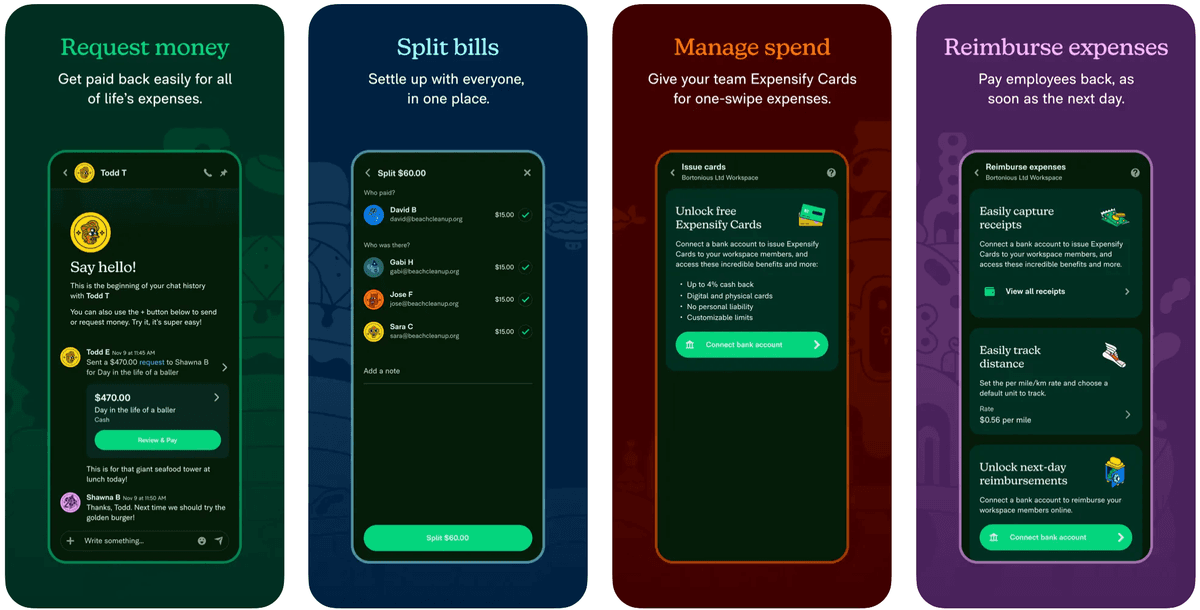
Hiring me for AI chatbot development typically runs $15K–$80K depending on how many systems the bot has to touch and how strict your accuracy requirements are. A support-deflection bot over a clean knowledge base sits at the low end; a chatbot that reads accounts, takes actions, and needs guardrails and evaluation pipelines sits at the high end. I bring 7+ years of production delivery, Top Rated status on Upwork with $100K+ earned and verified client reviews, and experience shipping software used by millions of users — including as a Guest Engineer at Expensify. Most engagements go from kickoff to a production bot in 6–10 weeks.
Most chatbot projects fail for a boring reason: the bot answers confidently from bad or missing data, and the team only finds out after customers do. This service exists to ship a chatbot that is measurably accurate on your real questions, wired into your real systems, with a way to know when it's wrong. Delivery succeeds when evaluation is built before the bot, not after.
Weekly demos, async Slack updates, production standards.
04
Ship
Store launch, documentation, knowledge transfer.
Engagements this covers
Support deflection for a SaaS product
A B2B SaaS team drowning in repetitive tickets wants a bot on their docs and help center. I build a retrieval pipeline over their content, an escalation path to human agents, and an evaluation set from real past tickets. The outcome is a bot that resolves the repetitive tier of tickets and hands off cleanly when it shouldn't answer.
In-app assistant that takes actions
A product team wants users to ask the app to do things — filter data, generate reports, update settings — in plain language. I design a tool-calling layer with typed function schemas, permission checks on every action, and confirmation flows for anything destructive. The result is an assistant that acts inside existing authorization boundaries instead of around them.
Replacing a failed chatbot build
A company shipped a bot with an agency, watched it hallucinate policy answers, and pulled it. I audit the existing pipeline, rebuild retrieval with proper chunking and reranking, add a grounded-answer check, and stand up an eval harness against their worst historical failures. They relaunch with per-question accuracy numbers instead of hope.
What a chatbot engagement looks like week by week
Weeks one and two are about your data and your failure cases, not the model. I collect real user questions — from tickets, sales calls, search logs — and build an evaluation set of 50–150 questions with known-correct answers. That set is the contract for the whole project.
Weeks three through five, I build the pipeline: ingestion and chunking of your content, retrieval, prompt assembly, and the escalation path for questions the bot shouldn't answer. Weeks six through eight are iteration against the eval set, integration into your channel (web widget, in-app, Slack, WhatsApp), and a limited rollout to a slice of traffic. You see accuracy numbers move week over week, so there is never a big-bang reveal where the bot either works or doesn't. Handoff includes the eval harness itself, so your team can measure regressions when they change content or models later.
What actually drives cost between $15K and $80K
The model is the cheapest part of a chatbot. Cost is driven by three things. First, data condition: if your knowledge lives in clean docs, ingestion is days; if it lives in PDFs, tribal knowledge, and a wiki that contradicts itself, expect weeks of content triage. Second, actions: a bot that only answers questions is dramatically cheaper than one that touches accounts, issues refunds, or writes to your database, because every action needs permissions, confirmation flows, and audit logging.
Third, accuracy stakes: a bot that recommends blog posts can be 90% right; a bot answering billing or medical or legal-adjacent questions needs guardrails, grounded citations, and human review loops, and that engineering is where budgets grow. A scoped support bot over good docs lands near $15K–$25K. Multi-system, action-taking bots with strict accuracy requirements run $50K–$80K.
Red flags when buying chatbot development
The biggest red flag is a vendor who demos on your data in the first call and calls it nearly done. A demo that answers five cherry-picked questions is an afternoon of work; the remaining 95% of the project is making it fail safely on the thousands of questions nobody demoed. Ask any vendor how they'll measure accuracy, and walk away if the answer is 'we'll test it manually.'
Second red flag: no plan for what happens when the bot doesn't know. Every production chatbot needs an explicit refusal and escalation design — otherwise it fills gaps with confident invention, and one screenshot of a wrong policy answer on social media costs more than the entire project. Third: quoting a price before seeing your data. Data condition is the single biggest cost variable, and anyone quoting blind is either padding heavily or planning a change-order later.
How to evaluate anyone for this work — including me
Ask three questions. First: 'Show me an evaluation harness from a past project.' You want to see automated scoring against a fixed question set, not vibes. Second: 'What was your worst hallucination in production and what did you change?' Anyone who has shipped a real bot has a story; anyone who claims theirs never hallucinated hasn't measured. Third: 'Where would you refuse to let the bot answer?' A senior answer names specific categories — pricing commitments, legal, anything contractual — and describes the escalation path.
Also check that they've operated bots, not just launched them: token cost monitoring, prompt versioning, and a process for re-testing when the underlying model gets upgraded. Model providers deprecate and swap models on their schedule, not yours, and a bot with no regression suite silently degrades when that happens.
When you should not build a chatbot
If your support volume is under a few hundred tickets a month, a well-organized help center and saved replies will beat a chatbot on cost for years — spend $5K improving docs instead of $30K on a bot that reads bad docs. If your knowledge base is badly out of date, fix that first; retrieval over wrong content produces fluent wrong answers, which is worse than no bot.
And if the real goal is 'we need to say we have AI' for a board deck or a sales page, say that honestly and scope a two-week pilot, not a full build. I've talked buyers out of chatbot projects in the first call more than once, and it's why the ones I do take on ship. A chatbot is a good investment when there is repetitive, answerable volume and content worth grounding in — and a bad one otherwise.
Low-risk to start
✓Fixed-scope proposal first
You approve milestones and a price before any build starts — no open-ended hourly surprises.
✓Working demos every week
You see running software each week, not status reports, so you can course-correct early.
✓One senior owner, no hand-offs
The person who scopes the work is the person who builds it — no junior layers, no agency markup.
✓A track record you can verify
Top Rated on Upwork with public client reviews and $100K+ earned, plus contributions to Expensify. Check the receipts before you commit.
How much does it cost to build an AI chatbot for a business?
For custom development with a senior engineer, expect $15K–$80K. A support bot over clean documentation with human escalation lands around $15K–$25K. Bots that take actions in your systems, need strict accuracy guarantees, or integrate multiple data sources run $40K–$80K. Ongoing costs are model API usage — often a few hundred dollars a month at moderate traffic — plus periodic re-evaluation when content or models change.
How long does AI chatbot development take?
A production support chatbot typically takes 6–10 weeks: two weeks on data preparation and building an evaluation set from real user questions, three weeks building the retrieval and answer pipeline, then several weeks of measured iteration and a limited rollout. Action-taking bots with multiple integrations run 10–14 weeks. Anyone promising a production-grade bot in two weeks is describing a demo, not a deployment.
Should I use an off-the-shelf chatbot platform or build custom?
Use a platform (Intercom Fin, Zendesk AI) if your needs are pure support deflection over a help center — they're cheaper than custom work and improving fast. Build custom when the bot must take actions in your product, combine multiple private data sources, live inside your mobile app, or meet accuracy and compliance requirements that platforms can't guarantee. I tell prospects when a platform is the right answer; roughly a third of my chatbot inquiries end that way.
How much does ai chatbot development typically cost?
Projects typically fall in the $15K–$80K range depending on scope, integrations, and timeline. I provide a fixed-scope proposal after a 30-minute scoping call.
How long does a ai chatbot development project take?
MVPs often ship in 8–12 weeks. Production systems with AI backends or RAG may run 12–20 weeks. Rescue and audit engagements can start within days.
Do you work with startups and enterprises?
Yes. I work with founders, CTOs, product teams, and agencies worldwide — US, UK, EU, and APAC time zones with async updates and weekly demos.
Can you own mobile and backend together?
Yes. I specialize in React Native + Python (FastAPI) + AI (RAG, agents, OpenAI/Claude) under one senior owner — fewer handoffs, faster shipping.
How do I get started?
Book a free 30-minute scoping call on this site, hire through Upwork, or email dhairyasenjaliya@gmail.com with your brief and timeline.