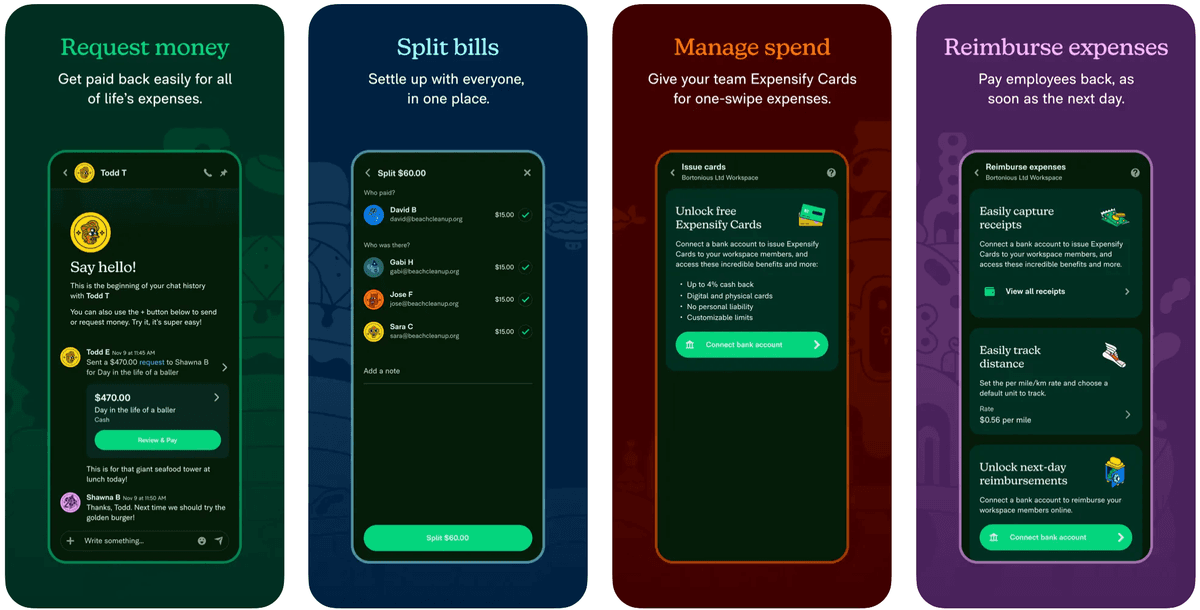
Most AI automation projects I build land between $15K and $80K — the low end covers a single workflow like document extraction or inbox triage, the high end covers multi-step automations wired into several internal systems with human review built in. I bring 7+ years of production delivery, time as a Guest Engineer at Expensify, and Top Rated status on Upwork with $100K+ earned and verified client reviews. Hiring starts with a short scoping conversation where I map the workflow, give you an honest accuracy estimate, and quote a fixed scope before you commit to anything.
Every company has processes where a person copies information between systems, reads documents, or answers the same questions all day. AI automation done well removes the drudgery without removing accountability — and the gap between an impressive demo and a system your team actually trusts is measurement, review queues, and honest failure handling.
Weekly demos, async Slack updates, production standards.
04
Ship
Store launch, documentation, knowledge transfer.
Engagements this covers
Document intake without the data entry
An operations team keys data from PDFs — invoices, claims, orders — into their system by hand. I build an extraction pipeline that parses each document with an LLM, validates fields against business rules, and routes low-confidence results to a human review queue. The team stops keying everything and starts reviewing only the exceptions, with accuracy tracked per field.
A support inbox that triages itself
Inbound email volume has outgrown the support team. I build a classifier that tags intent and urgency, drafts responses grounded in the company knowledge base, and routes edge cases to humans. Agents approve or edit drafts rather than writing from scratch, first-response time drops, and every automated action is logged for audit.
Reports that write themselves
Leadership wants a weekly operations summary that currently takes an analyst a full day to assemble from four tools. I build a pipeline that pulls the numbers, computes the deltas deterministically, and uses an LLM only for the narrative layer. The analyst reviews and ships in twenty minutes, and the figures are never hallucinated because code, not the model, produces them.
What an engagement looks like week by week
Week one is discovery: I sit with the people who do the manual work today, collect real samples — actual documents, actual emails, actual edge cases — and define what success means as a number, not a vibe. Weeks two and three are the core build: the pipeline, the integrations with your existing systems, and a first accuracy pass against the sample set.
The middle weeks are where the honest work happens — testing against messy production data, tightening prompts and validation rules, and building the human review queue for whatever the model cannot handle confidently. The final phase runs the automation in shadow mode alongside the manual process so you can compare outputs before anything goes live. A single-workflow project is typically four to eight weeks; multi-system automations run three to five months.
What actually drives cost between $15K and $80K
Three things move the number. First, integration surface: an automation that reads from one inbox and writes to one database is cheap; one that touches your CRM, your ERP, and a legacy internal tool with no API is not. Second, the accuracy bar: getting a document pipeline from 85 percent to 95 percent field accuracy often costs more than the first 85 percent did, because the remaining errors are the genuinely hard cases.
Third, review tooling: if humans need a purpose-built queue to approve, correct, and escalate, that interface is real product work. Model API costs, by contrast, are rarely the story — for most business automations the monthly LLM bill is small next to the labor it replaces. When I quote, I break these three drivers out separately so you can trade scope against budget deliberately.
Red flags when buying AI automation
The biggest red flag is a vendor who quotes before seeing your real data. Sample documents and live production documents behave very differently, and anyone pricing off a description alone is guessing. Second: promises of full autonomy on day one. Serious builders talk about review queues, confidence thresholds, and shadow-mode rollouts, because they know models fail in ways that only surface at volume.
Third: no accuracy definition in the contract. If the proposal does not say what will be measured and against what baseline, you have no way to know whether the project succeeded. Fourth: everything built inside a no-code tool you cannot inspect or export. Those platforms are fine for prototypes, but if the automation matters, you want code your team can own, version, and extend after the engagement ends.
Accuracy targets and human review — the honest version
No LLM pipeline is 100 percent accurate, and anyone who implies otherwise is selling. The engineering question is never whether the system will make mistakes — it is what happens when it does. I design every automation around a confidence threshold: outputs above it flow through automatically, outputs below it land in a review queue with the source material attached so a human can decide in seconds.
This matters commercially, not just technically. An automation that handles 80 percent of volume automatically and routes 20 percent to fast human review usually delivers more value than one tuned for 95 percent autonomy that occasionally ships a confident, expensive error. During scoping I will tell you which of your fields and cases the model will handle reliably and which it will not — before you have spent the budget, not after.
When you should not buy AI automation
If the workflow is fully deterministic — the same input always produces the same output by rule — you want ordinary scripting, not AI, and I will tell you so because it costs a fraction as much. If the process runs a handful of times a month, the automation will never repay its build cost; hire a virtual assistant instead. If your data lives in systems nobody can get API access to, fix the access problem first, because no model can automate what it cannot reach.
And if the real problem is a broken process — approvals that bounce between three departments because ownership is unclear — automating it just makes the chaos faster. I turn down a fair number of automation projects at scoping for exactly these reasons, and the founders involved usually thank me later.
Low-risk to start
✓Fixed-scope proposal first
You approve milestones and a price before any build starts — no open-ended hourly surprises.
✓Working demos every week
You see running software each week, not status reports, so you can course-correct early.
✓One senior owner, no hand-offs
The person who scopes the work is the person who builds it — no junior layers, no agency markup.
✓A track record you can verify
Top Rated on Upwork with public client reviews and $100K+ earned, plus contributions to Expensify. Check the receipts before you commit.
Expect $15K–$30K for a single well-defined workflow such as document extraction or email triage, $30K–$50K for automations spanning two or three systems with a human review queue, and up to $80K for multi-step automations integrated deeply with internal tools. The main cost drivers are integration count, the accuracy bar you need, and whether reviewers need purpose-built tooling.
How long does it take to build an AI automation?
A single workflow typically ships in four to eight weeks: one week of discovery with real data, two to three weeks of core build, then testing against production samples and a shadow-mode run before go-live. Larger automations touching several systems run three to five months. The schedule risk is almost always data access and edge cases, not the AI itself.
Should I build custom AI automation or use Zapier-style tools?
Use no-code tools when the workflow is simple, low-volume, and failure is cheap — they are faster and cost almost nothing. Go custom when you need accuracy measurement, human review queues, retry and error handling, or integrations those platforms do not support. A reasonable path is prototyping in a no-code tool to validate value, then rebuilding in code once the automation becomes load-bearing.
How much does ai automation development typically cost?
Projects typically fall in the $15K–$80K range depending on scope, integrations, and timeline. I provide a fixed-scope proposal after a 30-minute scoping call.
How long does a ai automation development project take?
MVPs often ship in 8–12 weeks. Production systems with AI backends or RAG may run 12–20 weeks. Rescue and audit engagements can start within days.
Do you work with startups and enterprises?
Yes. I work with founders, CTOs, product teams, and agencies worldwide — US, UK, EU, and APAC time zones with async updates and weekly demos.
Can you own mobile and backend together?
Yes. I specialize in React Native + Python (FastAPI) + AI (RAG, agents, OpenAI/Claude) under one senior owner — fewer handoffs, faster shipping.
How do I get started?
Book a free 30-minute scoping call on this site, hire through Upwork, or email dhairyasenjaliya@gmail.com with your brief and timeline.