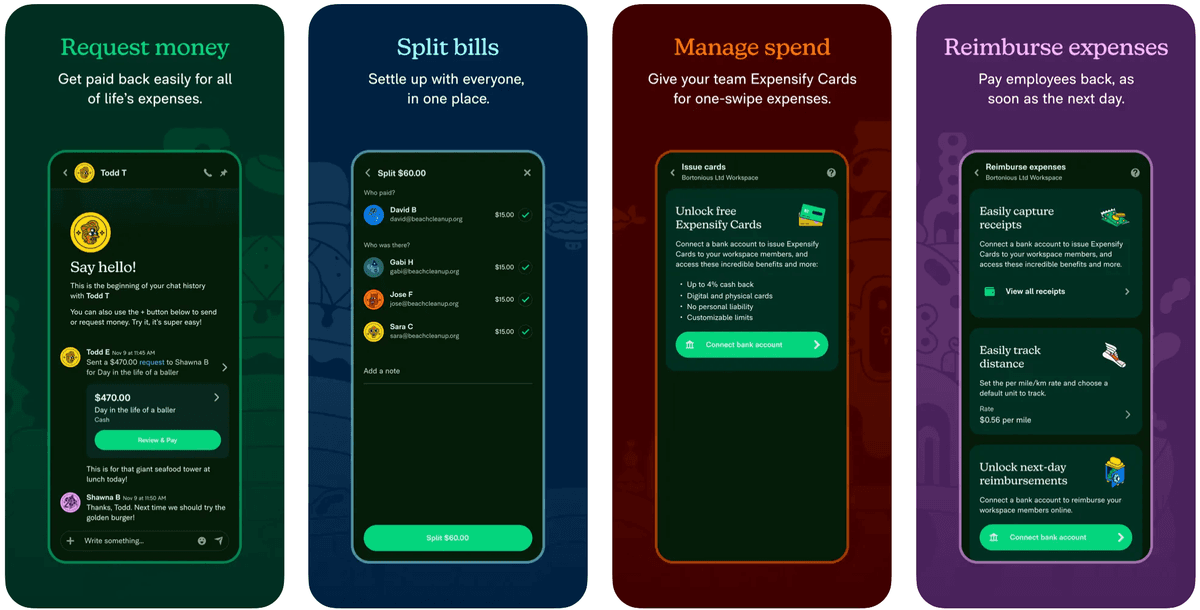
I build production AI assistants — support bots, internal copilots, and in-app assistants — as a solo senior engineer, with most projects landing between $20K and $100K depending on how many systems the assistant touches and how rigorously it must be evaluated before launch. I've spent 7+ years shipping production software, worked as a Guest Engineer at Expensify, and I'm Top Rated on Upwork with $100K+ earned and verified client reviews. A typical assistant reaches an internal pilot in about a month and full production in 8–14 weeks, with the budget covering scoping, retrieval, tool integration, and evaluation — not just a chat window.
Most companies asking for 'an AI chatbot' actually need one specific workflow — support, onboarding, or internal operations — handled by a system that knows when to answer, when to act, and when to hand off to a human. Assistants fail in production for unglamorous reasons: weak retrieval, no evaluation set, no escalation path. Delivery succeeds when those three are treated as the core of the project rather than afterthoughts.
Weekly demos, async Slack updates, production standards.
04
Ship
Store launch, documentation, knowledge transfer.
Engagements this covers
Support assistant that actually deflects tickets
A SaaS company's support queue is growing faster than the team. I build an assistant grounded on their help docs and account data, define a strict escalation contract for anything uncertain, and measure deflection against a baseline. The outcome is a measured percentage of tickets resolved without a human, with wrong-answer rates tracked weekly instead of guessed at.
Internal copilot over your own tools
An operations team spends hours a day looking things up across a CRM, a billing system, and spreadsheets. I build a permissioned assistant that answers from those systems and performs approved actions with an audit log. Staff get answers in seconds instead of tab-hopping, and every action the assistant takes is traceable to a person and a prompt.
An assistant inside your mobile app
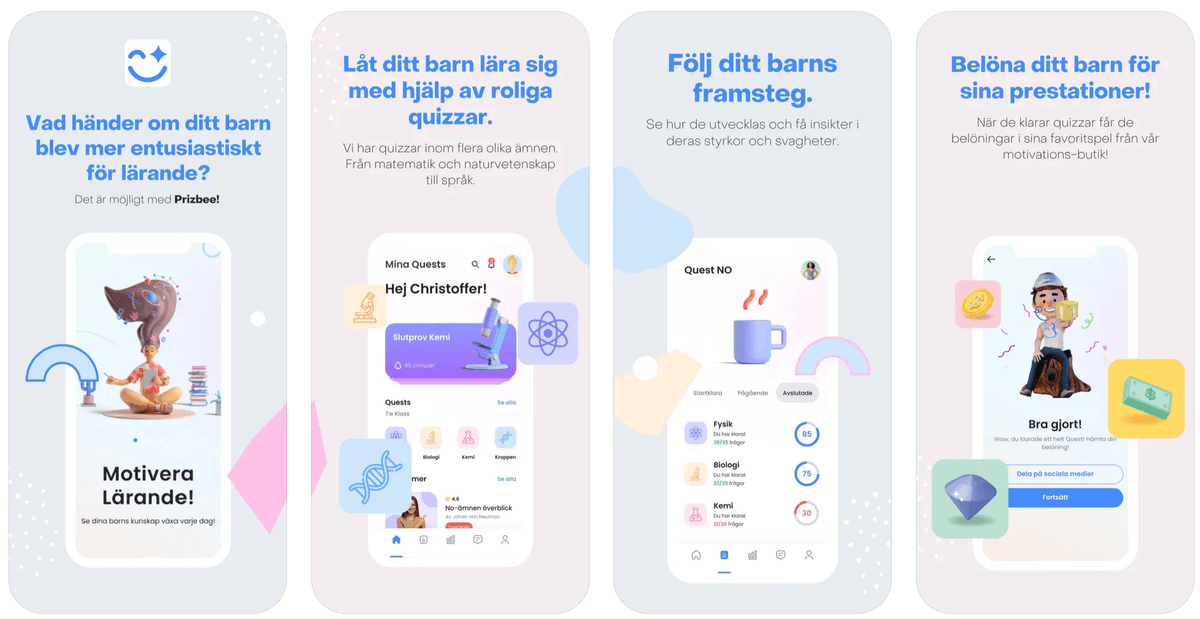
A product team wants an in-app assistant that helps users get value faster — answering questions, guiding setup, surfacing features. Because I ship React Native for a living, I build both the assistant backend and the streaming chat UI natively into the app, instrumented so you can see exactly what users ask and where the assistant falls short.
What the engagement looks like week by week
Weeks one and two are about narrowing to a single workflow and collecting evidence: real support transcripts, real internal questions, real user sessions. From those I build a golden evaluation set — a few hundred question-and-expected-answer pairs — and define the escalation contract: exactly when the assistant must say 'I don't know' or route to a human. This is unexciting work and it determines everything downstream.
Weeks three through five produce a working assistant over your actual data with the first tool integrations, released to internal users. Weeks six onward are a hardening loop: run the eval set, fix the worst failure class, re-run, repeat — while adding guardrails, logging, and rate limits. Production rollout happens behind a flag to a small cohort first, because live traffic always surfaces question patterns the transcripts didn't.
What actually drives cost inside $20K–$100K
The low end covers a single-channel assistant that answers read-only questions over a clean document set. Cost climbs with each capability that raises the stakes of being wrong. Tool calling that changes data — issuing refunds, updating records — needs permissioning, confirmation steps, and audit logging. Each additional channel (web, mobile, Slack, email) adds integration and testing surface. Voice roughly doubles the interface work.
The hidden multiplier is content quality. If your help docs are outdated or contradictory, the assistant faithfully amplifies that, so budget shifts into cleaning and structuring source material. Model API fees, which buyers worry about most, are usually the smallest line item — a well-cached assistant serving thousands of conversations a month typically costs a few hundred dollars to run. The engineering that makes it trustworthy is where the money goes.
Red flags when you're buying assistant development
Be suspicious of anyone who demos on their own data instead of yours — every assistant looks brilliant answering questions about content it was tuned on. Be suspicious of a fixed quote delivered before anyone has asked which workflow the assistant handles and what happens when it's wrong; those are the two questions that define the project. And walk away from 'the model will handle it' answers to edge cases: hallucinated refund promises, prompt injection through user content, and confidently wrong answers to out-of-scope questions are engineering problems with engineering solutions, not things the next model release fixes.
The most reliable tell is whether evaluation comes up unprompted. A builder who has shipped assistants will talk about eval sets, wrong-answer rates, and escalation before they talk about which model to use. One who hasn't will lead with the model.
How to evaluate any developer for this work — including me
Ask three questions. First: 'How will we know it's good?' The answer should involve a labeled evaluation set built from your real questions, with quality tracked as a number over time — not screenshots of good answers. Second: 'Tell me about an assistant that failed.' Anyone who has shipped several has a story about retrieval that broke, users who asked things nobody predicted, or a launch that got rolled back; a candidate with no failure stories hasn't operated one in production. Third: 'What does the assistant do when it doesn't know?' You want a specific escalation design, not reassurance.
Then ask to see one live. A production assistant you can poke at — and an honest account of its current wrong-answer rate — tells you more than any portfolio page.
When you shouldn't build an assistant
If your support volume is a handful of conversations a day, a human answering them is cheaper, better, and teaches you more about your customers. If your documentation is thin or wrong, fix the documentation first — an assistant grounded on bad content is an automation of bad answers. And if you can't name the metric an assistant should move — deflection rate, time-to-resolution, activation — you're buying a demo, not a system, and it will quietly get turned off in six months.
There's also a simpler-tool test: a lot of 'we need an AI assistant' requests are actually search problems or UX problems. Better in-app search or a redesigned onboarding flow sometimes delivers the outcome at a fifth of the cost. I'd rather tell you that in week one than bill you for ten.
Low-risk to start
✓Fixed-scope proposal first
You approve milestones and a price before any build starts — no open-ended hourly surprises.
✓Working demos every week
You see running software each week, not status reports, so you can course-correct early.
✓One senior owner, no hand-offs
The person who scopes the work is the person who builds it — no junior layers, no agency markup.
✓A track record you can verify
Top Rated on Upwork with public client reviews and $100K+ earned, plus contributions to Expensify. Check the receipts before you commit.
How much does it cost to build an AI assistant for my business?
Realistic production builds run $20K–$100K. A single-channel assistant answering questions over your docs sits near the bottom of that range; a multi-channel assistant that takes actions across several internal systems with strict evaluation and audit requirements sits near the top. Ongoing model API costs after launch are usually modest — the build, evaluation, and integration work is where the budget goes.
How long does it take to launch a production AI assistant?
Plan on 8–14 weeks to production. An internal pilot over your real data is usually live within 3–4 weeks; the remaining time is the part that matters — evaluation against real questions, guardrails, escalation flows, and a staged rollout. Anyone promising a production-grade assistant in two weeks is describing a demo.
Should I fine-tune my own model or build on GPT or Claude APIs?
Build on frontier APIs. For assistant use cases, retrieval over your content plus careful prompting and a solid evaluation loop outperforms fine-tuning in almost every case, and it keeps you free to swap models as they improve. Fine-tuning or self-hosting only makes sense at very large scale or under strict data-residency constraints — and you'll know clearly if that's you.
How much does ai assistant development typically cost?
Projects typically fall in the $20K–$100K range depending on scope, integrations, and timeline. I provide a fixed-scope proposal after a 30-minute scoping call.
How long does a ai assistant development project take?
MVPs often ship in 8–12 weeks. Production systems with AI backends or RAG may run 12–20 weeks. Rescue and audit engagements can start within days.
Do you work with startups and enterprises?
Yes. I work with founders, CTOs, product teams, and agencies worldwide — US, UK, EU, and APAC time zones with async updates and weekly demos.
Can you own mobile and backend together?
Yes. I specialize in React Native + Python (FastAPI) + AI (RAG, agents, OpenAI/Claude) under one senior owner — fewer handoffs, faster shipping.
How do I get started?
Book a free 30-minute scoping call on this site, hire through Upwork, or email dhairyasenjaliya@gmail.com with your brief and timeline.