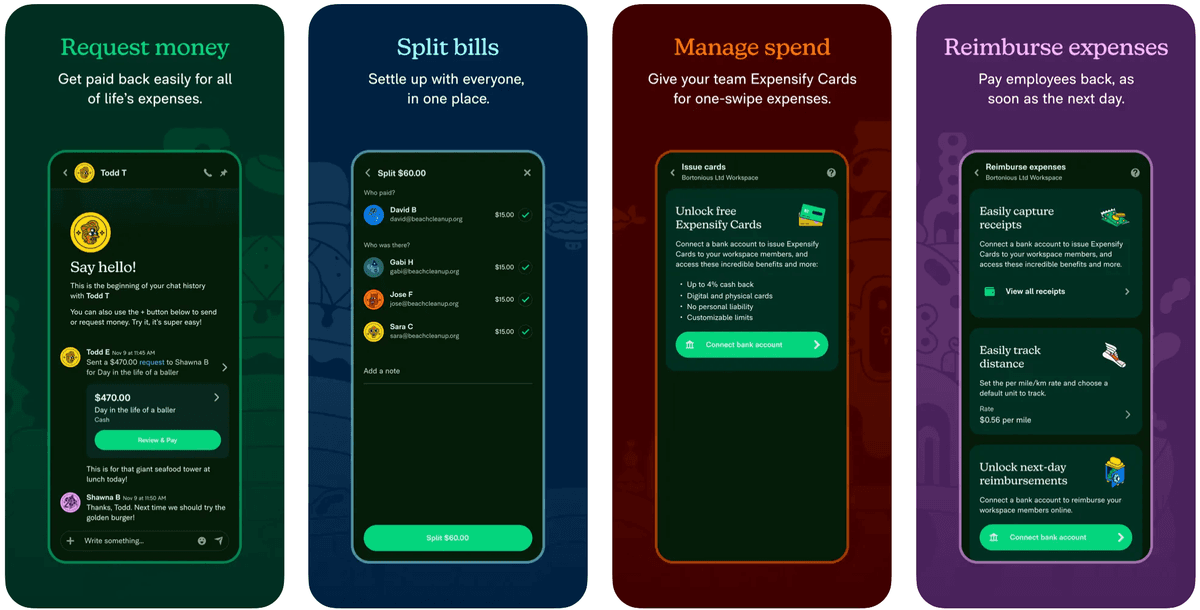
Agentic AI development — systems where an LLM plans, calls tools, and completes multi-step work on its own — typically costs $40K–$200K depending on how many systems the agent touches and how much autonomy it earns. I build these systems hands-on, backed by 7+ years of production delivery, work as a Guest Engineer at Expensify, and a Top Rated Upwork track record with $100K+ earned and verified client reviews. Hiring me starts with a paid scoping sprint that pins down the agent's job description, its tool surface, and the evaluation suite before any orchestration code exists. From there we agree on a fixed milestone plan, so you always know what ships next and what it proves.
Most companies do not have an AI problem — they have a workflow that eats expensive human hours and could be delegated to software that reasons. Agentic AI development turns that workflow into a system an LLM can execute reliably, with tools, guardrails, and measurable success rates. Delivery succeeds when the agent's job is narrowly defined and its failures are boring and recoverable, not when the demo looks magical.
Weekly demos, async Slack updates, production standards.
04
Ship
Store launch, documentation, knowledge transfer.
Engagements this covers
Support operations agent
A SaaS team drowns in tier-one tickets that follow predictable patterns. I build an agent that reads the ticket, pulls account context from the CRM and billing system, drafts or executes the resolution, and escalates anything ambiguous. The outcome is a measured deflection rate with full audit logs, not a chatbot that guesses.
Back-office workflow agent
An operations team spends hours daily reconciling data across spreadsheets, email, and an internal admin panel. I map the workflow, expose each step as a typed tool, and build an agent that runs the sequence with human checkpoints at the risky steps. Staff review a queue of proposed actions instead of doing the work manually.
Agentic feature inside an existing product
A funded startup wants its users to say what they want done rather than click through screens. I design the tool layer over their existing API, build the planning loop, and instrument every run for cost and correctness. The feature ships behind a flag with an eval suite the in-house team can extend after handoff.
What an agentic engagement looks like week by week
The first one to two weeks are a scoping sprint: I shadow the workflow you want automated, write the agent's job description in plain language, and define the tool surface — every API, database, and system the agent may touch, with exact permissions. This sprint also produces the first eval set: twenty to fifty real cases with known-correct outcomes.
Weeks three through six build the core loop against those evals — tools first, orchestration second, prompts last, because prompts are the cheapest thing to change. The remaining weeks are hardening: failure injection, cost profiling, human-review queues, and observability so every agent run is replayable. Larger engagements repeat this cycle per workflow rather than building one giant agent, which is how the budget scales from $40K toward $200K.
What actually drives cost between $40K and $200K
Three variables move the number more than anything else. First, the tool surface: an agent that reads and writes across five internal systems costs multiples of one that operates on a single API, because each integration needs typed contracts, permission scoping, and failure handling. Second, autonomy: an agent that proposes actions for human approval is far cheaper to make safe than one that executes irreversibly on its own. Third, evaluation depth: a workflow where a wrong answer costs a support escalation needs a lighter eval harness than one touching money or customer data.
Model API spend is rarely the issue — engineering the system around the model is. If a vendor quotes you primarily on token costs, they have not built one of these in production.
Red flags when buying agentic AI
The most common failure I get called in to fix is the demo-first vendor: an impressive screen recording, no eval suite, no answer to "what happens when the agent is wrong." If a proposal has no section on failure handling, walk away. Second red flag: framework-led pitches. Whether it is LangGraph, CrewAI, or hand-rolled loops matters far less than whether the tool contracts are typed and the runs are replayable — vendors who lead with the framework usually have nothing else to show.
Third: the everything-agent. Proposals that promise one agent handling support, sales, and operations simultaneously ignore that reliability comes from narrow scope. Four narrow agents that each work beat one broad agent that almost works, every time.
How to evaluate anyone you are considering — including me
Ask three questions. One: "show me the eval methodology from your last agent project" — you want to hear about held-out test cases, task completion rates, and regression runs on every prompt change, not vibes. Two: "what did your last agent do when a tool call failed mid-task?" — the answer reveals whether they have operated one of these in production or only demoed it. Three: "what would you cut from my scope?" — a senior builder will immediately name workflows that should stay deterministic code.
Also ask who maintains the system after handoff. A good engagement ends with your team able to add tools and extend evals without the original builder. If the vendor's answer is a retainer dependency, the architecture is probably a black box.
When you should not buy agentic AI
If the workflow is fully specifiable — the same inputs always demand the same outputs — you want a normal pipeline, not an agent. Deterministic code is cheaper to build, free to run, and never hallucinates. Agents earn their cost only where inputs are messy, judgment is genuinely required, and the volume is high enough that human hours hurt.
Skip agents too if you cannot tolerate a nonzero error rate anywhere in the loop and cannot afford a human checkpoint. And if your workflow runs a handful of times per week, the math rarely works: $40K buys a lot of human processing of rare cases. I turn down roughly a third of agentic inquiries for exactly these reasons, and I will tell you in the first call if yours is one of them.
Low-risk to start
✓Fixed-scope proposal first
You approve milestones and a price before any build starts — no open-ended hourly surprises.
✓Working demos every week
You see running software each week, not status reports, so you can course-correct early.
✓One senior owner, no hand-offs
The person who scopes the work is the person who builds it — no junior layers, no agency markup.
✓A track record you can verify
Top Rated on Upwork with public client reviews and $100K+ earned, plus contributions to Expensify. Check the receipts before you commit.
Realistic production builds run $40K–$200K. A single narrow-scope agent with a small tool surface and human approval on actions sits at the low end. Multi-workflow systems touching several internal APIs, with deep eval suites and full autonomy on some actions, reach the top. Beware quotes far below this range — they usually price the demo, not the failure handling, evals, and observability that make an agent usable.
How long does it take to ship a production AI agent?
A focused single-workflow agent takes eight to twelve weeks: one to two for scoping and eval design, three to four for the core loop and tools, and the rest for hardening and a supervised pilot. Multi-agent or multi-workflow programs run four to six months. Anyone promising a production-grade autonomous agent in two weeks is describing a prototype.
Should I build an AI agent or a regular automation?
Build regular automation if the workflow's rules can be written down completely — it will be cheaper, faster, and error-free. Build an agent only when inputs are unstructured, real judgment is needed at runtime, and volume justifies the investment. A good test: if a smart new hire needs a week of training to do the task, it is agent territory; if they need a checklist, write code.
How much does agentic ai development typically cost?
Projects typically fall in the $40K–$200K range depending on scope, integrations, and timeline. I provide a fixed-scope proposal after a 30-minute scoping call.
How long does a agentic ai development project take?
MVPs often ship in 8–12 weeks. Production systems with AI backends or RAG may run 12–20 weeks. Rescue and audit engagements can start within days.
Do you work with startups and enterprises?
Yes. I work with founders, CTOs, product teams, and agencies worldwide — US, UK, EU, and APAC time zones with async updates and weekly demos.
Can you own mobile and backend together?
Yes. I specialize in React Native + Python (FastAPI) + AI (RAG, agents, OpenAI/Claude) under one senior owner — fewer handoffs, faster shipping.
How do I get started?
Book a free 30-minute scoping call on this site, hire through Upwork, or email dhairyasenjaliya@gmail.com with your brief and timeline.