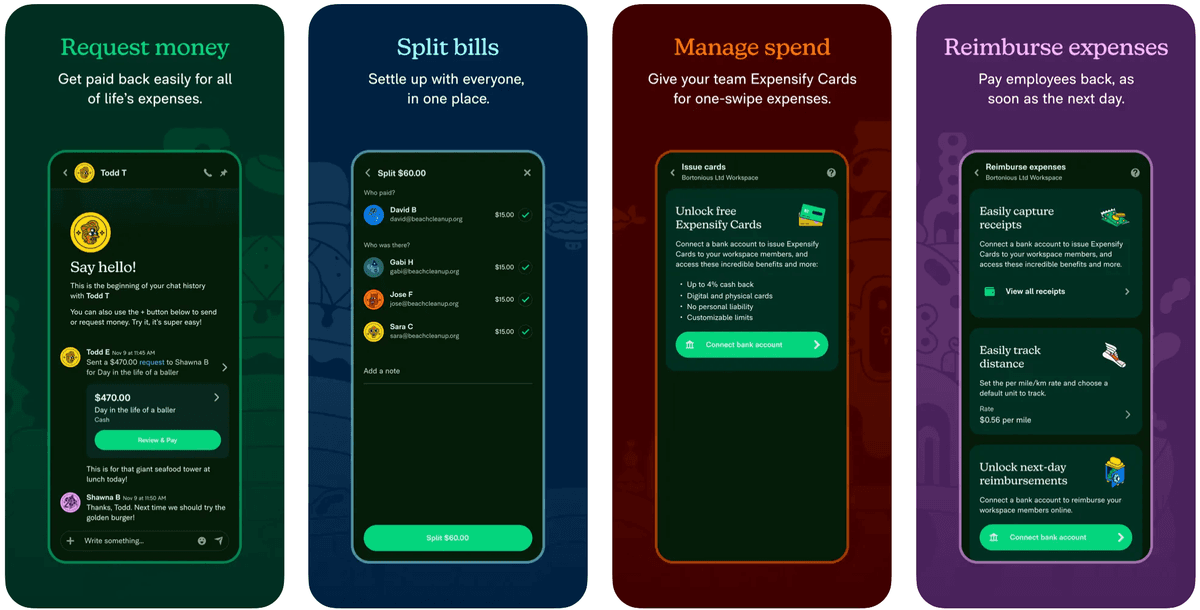
I handle model deployment engagements — getting ML and LLM-based systems from a notebook or prototype into reliable production serving — for $15K–$70K, typically over 4–10 weeks. The low end covers packaging and deploying a single model behind a monitored API; the high end covers GPU serving infrastructure, autoscaling, A/B rollout, and monitoring for drift and cost. I bring 7+ years of production delivery, Top Rated status on Upwork with $100K+ earned, and experience as a Guest Engineer at Expensify shipping systems used by millions of users — which is exactly the operational bar a deployed model has to meet.
The gap between 'the model works' and 'the model serves 200 requests a second at 3 a.m. without paging anyone' is an engineering discipline of its own, and it's where most ML investment quietly dies. This service closes that gap: packaging, serving, scaling, and monitoring, so your data science work actually reaches users. Delivery succeeds when the deployment is boring — observable, rollback-able, and cheap enough to leave running.
Weekly demos, async Slack updates, production standards.
04
Ship
Store launch, documentation, knowledge transfer.
Engagements this covers
Notebook to production API
A data scientist built a model that works in a notebook; the company has no path to serve it. I containerize the inference code, put it behind a versioned API with input validation, set up CI that rebuilds and tests on model updates, and add latency and error monitoring. The team goes from emailing pickle files to deploying new model versions with one merge.
LLM inference cost and latency control
A product built on hosted LLM APIs is watching costs climb and latency vary wildly. I add response caching, prompt compression, model routing (small model for easy requests, large for hard ones), and per-feature cost attribution. The outcome is typically a meaningful cut in spend and p95 latency, with a dashboard showing exactly which feature burns which tokens.
Self-hosted model serving
A company with privacy constraints needs an open-weights model running on their own infrastructure. I benchmark candidate models against their quality bar, set up GPU serving with vLLM or similar, configure autoscaling and health checks, and load-test to a stated throughput target. They get a served endpoint with known capacity and per-request cost, not a science experiment on a GPU box.
The shape of a deployment engagement
Week one is an audit of what exists: how the model is invoked today, what its real latency and resource profile is, and what 'production' has to mean for you — requests per second, acceptable p95, budget per thousand requests. These numbers are the spec; without them, deployment projects sprawl.
Weeks two through four cover packaging and serving: containerized inference, an API layer with validation and authentication, and a deployment pipeline where shipping a new model version is a code review, not a ritual. Weeks five onward add the operational layer — dashboards for latency, error rate, and cost; alerting with thresholds we choose together; load testing against your stated targets; and a rollback path proven by actually executing it once. Handoff includes runbooks: what to do when latency spikes, when the GPU fills, when the upstream model provider has an outage. If your team can't operate it without me, I haven't finished.
Cost drivers between $15K and $70K
The single biggest driver is whether you're consuming hosted model APIs or serving models yourself. Hosted-API deployments are mostly software engineering — routing, caching, monitoring, fallbacks — and land in the $15K–$30K range. Self-hosted serving adds GPU infrastructure, model server tuning, and capacity planning, and starts around $30K.
After that: traffic profile (bursty consumer traffic needs autoscaling design that steady internal traffic doesn't), latency requirements (sub-second p95 on large models forces batching and hardware decisions that relaxed targets don't), and rollout sophistication — if you need shadow deployment and A/B comparison between model versions, that's real engineering but pays for itself the first time a 'better' model turns out worse on live traffic. What doesn't drive cost much: the specific cloud. I work with what you have; migrating clouds mid-project is a cost I'll talk you out of unless there's a compelling reason.
Where deployment projects go wrong
The classic failure is deploying the model without deploying the measurement. A model API that returns 200s can still be silently wrong — input distributions drift, upstream data pipelines change, a provider swaps model versions under you — and without quality monitoring, you find out from customers. The second failure is ignoring unit economics until the invoice arrives: teams deploy an LLM feature, usage grows, and suddenly inference costs rival payroll. Per-request cost should be a number you know before launch, not after.
Third: bespoke snowflake infrastructure. A deployment only an ex-contractor understands is a liability, which is why I bias toward your existing platform and mainstream tooling over clever custom setups. And a buying red flag: vendors who lead with Kubernetes-and-GPU-cluster architecture before asking about your traffic. Plenty of production models are served beautifully by one container and an autoscaler; complexity should be earned by load, not assumed.
How to evaluate a deployment engineer
Ask candidates for a war story: a model deployment that broke in production and what they changed afterward. You're listening for operational instincts — monitoring, rollback, capacity math — not framework names. Ask them to estimate serving cost for your workload on a whiteboard; a senior person will ask about request volume, latency targets, and model size, then produce a defensible per-thousand-requests number.
Ask what they'd monitor beyond uptime. The right answer includes latency percentiles, error taxonomy, cost per request, and some measure of output quality over time. Also ask what they would not build — anyone who plans to hand-roll their own model server or orchestration layer in 2026, when vLLM and managed endpoints exist, is optimizing for their own entertainment. My bias is the opposite: mainstream tools, your existing cloud, and the shortest path to something your team can run without me.
When you don't need this service
If you're calling a hosted model API at low volume — a few thousand requests a day — you don't need deployment engineering yet; you need retries, a timeout, basic logging, and a spending alert, which is a day of your own team's work. If your model isn't validated yet — accuracy still unproven on real data — deploying it professionally just industrializes uncertainty; finish the validation first.
And if your motivation for self-hosting is 'API costs feel high' without having measured them, run the math first: engineering time plus GPU hours frequently exceeds the API bill you're trying to avoid, especially below sustained heavy volume. Self-hosting earns its keep with real privacy constraints, latency floors, or genuinely large scale. I've told multiple prospects to stay on hosted APIs and spend a tenth of the budget on caching and routing instead — the ones who listened got the same margin improvement without owning GPUs.
Low-risk to start
✓Fixed-scope proposal first
You approve milestones and a price before any build starts — no open-ended hourly surprises.
✓Working demos every week
You see running software each week, not status reports, so you can course-correct early.
✓One senior owner, no hand-offs
The person who scopes the work is the person who builds it — no junior layers, no agency markup.
✓A track record you can verify
Top Rated on Upwork with public client reviews and $100K+ earned, plus contributions to Expensify. Check the receipts before you commit.
How much does it cost to deploy a machine learning model to production?
With a senior engineer, expect $15K–$70K depending on scope. Packaging one model behind a monitored, autoscaled API on your existing cloud runs $15K–$25K. LLM cost-and-latency engineering over hosted APIs lands mid-range. Self-hosted GPU serving with load testing, A/B rollout, and drift monitoring reaches $50K–$70K. Ongoing infrastructure costs vary enormously — from tens of dollars monthly for CPU inference to thousands for GPU fleets — and estimating yours is part of week one.
How long does model deployment take?
A single model behind a production API with monitoring and CI takes 4–6 weeks. Self-hosted LLM serving with benchmarking, autoscaling, and load testing runs 8–10 weeks. The work that stretches timelines is rarely the serving itself — it's undocumented preprocessing steps the model silently depends on, and defining latency and cost targets nobody had written down. If those exist on day one, timelines compress considerably.
Should I self-host an open-source model or use a hosted API?
Default to hosted APIs. Self-hosting wins in three situations: hard privacy or data-residency constraints, sustained high volume where GPU economics beat per-token pricing, or latency requirements hosted endpoints can't meet. Below roughly steady, heavy daily volume, engineering plus GPU costs usually exceed the API bill — and hosted frontier models often outperform what fits on your hardware. Benchmark quality on your actual tasks and compute both costs before committing; I do this analysis as part of every deployment engagement.
How much does model deployment services typically cost?
Projects typically fall in the $15K–$70K range depending on scope, integrations, and timeline. I provide a fixed-scope proposal after a 30-minute scoping call.
How long does a model deployment services project take?
MVPs often ship in 8–12 weeks. Production systems with AI backends or RAG may run 12–20 weeks. Rescue and audit engagements can start within days.
Do you work with startups and enterprises?
Yes. I work with founders, CTOs, product teams, and agencies worldwide — US, UK, EU, and APAC time zones with async updates and weekly demos.
Can you own mobile and backend together?
Yes. I specialize in React Native + Python (FastAPI) + AI (RAG, agents, OpenAI/Claude) under one senior owner — fewer handoffs, faster shipping.
How do I get started?
Book a free 30-minute scoping call on this site, hire through Upwork, or email dhairyasenjaliya@gmail.com with your brief and timeline.