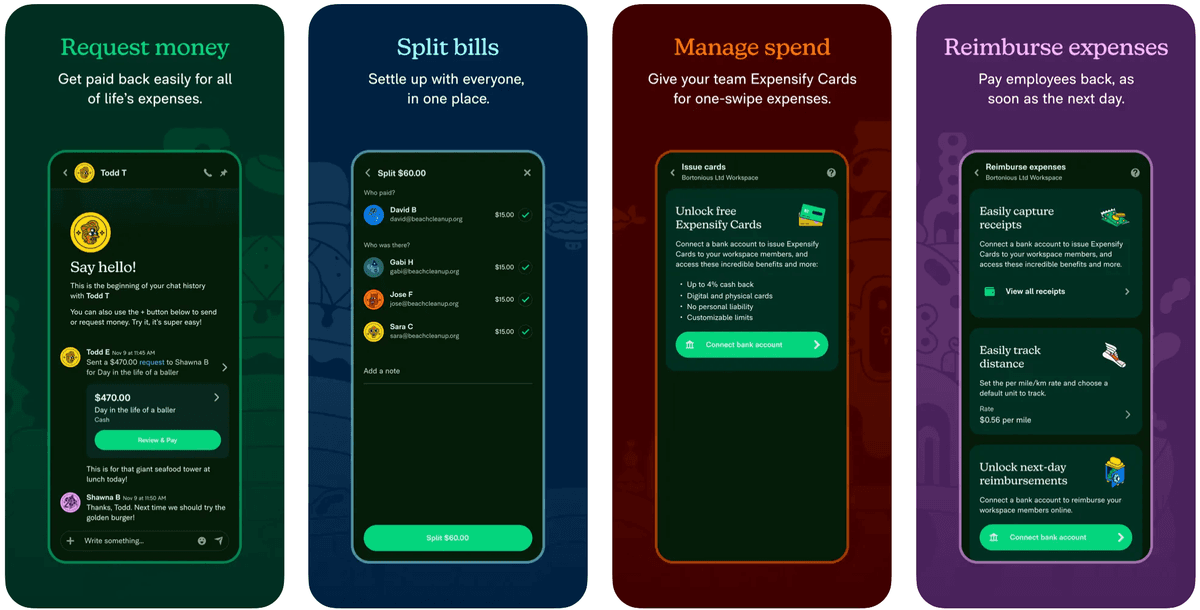
My MLOps consulting engagements run $15K–$80K: the low end is a focused audit and roadmap for how your models get to production, the high end is hands-on buildout of pipelines, deployment, monitoring, and eval infrastructure over several months. I bring 7+ years of production delivery, experience as a Guest Engineer at Expensify, and Top Rated status on Upwork with $100K+ earned and verified client reviews. Engagements begin with an audit of your current path from experiment to production, and you get a written findings report whether or not we continue past it.
Most ML teams can build a model; far fewer can ship one and keep it working. MLOps consulting closes that gap — turning notebooks and manual deploys into versioned pipelines, monitored endpoints, and a release process your team can run without heroics. In the LLM era that increasingly means eval harnesses and prompt versioning, not just model registries.
Weekly demos, async Slack updates, production standards.
04
Ship
Store launch, documentation, knowledge transfer.
Engagements this covers
From notebook to production pipeline
A data science team has a model that works in notebooks but reaches production through a manual, error-prone ritual one person knows how to perform. I build the path: versioned training pipelines, a model registry, containerized serving, and CI that retrains and validates on a schedule. Deployment goes from a nervous afternoon to a reviewed pull request.
Monitoring for a model already in production
A model has been live for a year and nobody knows if it still works — predictions flow, but drift is invisible until a business metric drops. I instrument the serving path, set up input and prediction drift detection with alerting, and build a dashboard tying model behavior to business outcomes. The team finds out about degradation from a Slack alert, not a quarterly review.
LLMOps for a team shipping on foundation models
A product team ships LLM features by editing prompts in production and hoping. I stand up the discipline: prompt versioning, an eval suite built from real user interactions, regression gates in CI, and cost and latency tracking per feature. Model upgrades become a measured decision backed by eval scores instead of a leap of faith every time a provider releases something new.
What MLOps consulting actually covers
The work spans four layers, and part of the engagement is deciding which ones you actually need. Training infrastructure: reproducible pipelines, experiment tracking, data versioning, so any model can be rebuilt from scratch. Deployment: containerized serving, staged rollouts, rollback paths, so shipping a model is boring. Monitoring: drift detection on inputs and outputs, latency and cost tracking, alerts tied to business metrics rather than vanity dashboards.
And increasingly, LLM operations: eval suites, prompt version control, and regression testing for teams building on foundation models rather than training their own. I deliberately fit tooling to team size — a four-person team gets a lean stack built on managed services, not the platform architecture a hundred-person ML org needs. Overbuilt MLOps is one of the most common and expensive failure modes in this space.
How the engagement runs
Weeks one and two are the audit: I trace how a model actually travels from experiment to production in your team today — where the manual steps are, what breaks, what nobody can reproduce, where the single points of failure sit. You get a written findings document with a prioritized roadmap, and some clients stop there and execute internally, which is a perfectly good outcome.
If I build, we sequence by pain: usually deployment automation first because manual deploys cause the most visible damage, then monitoring, then training pipeline reproducibility. Each piece lands with documentation and a working session with your team, because infrastructure only your consultant understands is a liability with an expiry date. A focused buildout runs six to ten weeks; a full pipeline-to-monitoring stack runs three to five months, which corresponds to the top of the budget range.
What drives cost between $15K and $80K
An audit with a roadmap sits at the bottom of the range, around $15K. From there, three variables set the price. Scope of the buildout: deployment automation alone versus deployment plus monitoring plus training pipelines. Current-state messiness: a team on a clean cloud setup with decent CI is a much faster job than one with models deployed by SSH from a laptop and datasets living in personal drives.
And team enablement: if you want your engineers running everything confidently when I leave — pairing sessions, runbooks, a shadowed on-call rotation for the first incidents — that handover work is real time and worth every dollar. One thing that does not drive my price: exotic tooling. I bias toward boring, managed, widely documented services because your team has to live with this stack long after the engagement ends.
Mistakes companies make buying MLOps
The most expensive mistake is buying a platform before diagnosing the problem. Teams adopt a heavyweight ML platform because a conference talk said to, then spend six months feeding the platform instead of shipping models. Tooling is the last decision, not the first. The second mistake is hiring for infrastructure when the actual problem is process — if data scientists throw models over a wall to engineers who rewrite them, no pipeline fixes that handoff.
Third: monitoring as an afterthought. Most budgets go entirely to training and deployment, yet production incidents almost always surface first as silent drift, not failed deploys. Fourth: measuring the consultant by tools installed rather than by questions answered. The test of good MLOps is concrete: can you reproduce any model? Can you roll back in minutes? Do you find out about degradation before your customers do? Ask vendors how their proposal answers those.
When you do not need MLOps consulting
If you have one model, it changes rarely, and a wrong prediction is cheap, a simple deploy script and a weekly metrics check are genuinely enough — I will tell you that in the audit rather than sell you a platform. If you have no model in production yet, ship one manually first; premature MLOps is infrastructure built for problems you do not have, tuned to guesses about workflows that will change.
If your models are entirely third-party APIs and your features are thin wrappers, you likely need an eval harness and cost monitoring, not the full MLOps stack — a smaller, cheaper engagement. And if the honest bottleneck is that your models are not good enough yet, spend the budget on data and modeling. Operations infrastructure makes a working model reliable; it cannot make a weak model useful.
Low-risk to start
✓Fixed-scope proposal first
You approve milestones and a price before any build starts — no open-ended hourly surprises.
✓Working demos every week
You see running software each week, not status reports, so you can course-correct early.
✓One senior owner, no hand-offs
The person who scopes the work is the person who builds it — no junior layers, no agency markup.
✓A track record you can verify
Top Rated on Upwork with public client reviews and $100K+ earned, plus contributions to Expensify. Check the receipts before you commit.
A two-week audit with a written roadmap runs around $15K. Hands-on buildout of deployment automation and monitoring typically lands $25K–$50K over six to ten weeks. A full stack — training pipelines, registry, serving, drift monitoring, and team handover — reaches $80K across three to five months. Team size and the messiness of your current setup move the number more than any tool choice.
How long does it take to set up MLOps infrastructure?
Expect two weeks for the audit, then six to ten weeks for the highest-impact pieces — automated deployment with rollback and production monitoring with drift alerts. A complete setup including reproducible training pipelines runs three to five months. Sequencing matters: deployment automation usually lands first because manual deploys cause the most damage, and each piece delivers value on its own.
Should I hire an MLOps consultant or a full-time MLOps engineer?
Hire a consultant when the work is a bounded transformation — audit the current state, build the pipelines, train the team, leave documentation. Hire full-time when you have enough models and enough change velocity to keep someone busy indefinitely, which usually means several models in production across multiple teams. The common path is consultant first to build the foundation, then a full-time hire to run it.
How much does mlops consulting typically cost?
Projects typically fall in the $15K–$80K range depending on scope, integrations, and timeline. I provide a fixed-scope proposal after a 30-minute scoping call.
How long does a mlops consulting project take?
MVPs often ship in 8–12 weeks. Production systems with AI backends or RAG may run 12–20 weeks. Rescue and audit engagements can start within days.
Do you work with startups and enterprises?
Yes. I work with founders, CTOs, product teams, and agencies worldwide — US, UK, EU, and APAC time zones with async updates and weekly demos.
Can you own mobile and backend together?
Yes. I specialize in React Native + Python (FastAPI) + AI (RAG, agents, OpenAI/Claude) under one senior owner — fewer handoffs, faster shipping.
How do I get started?
Book a free 30-minute scoping call on this site, hire through Upwork, or email dhairyasenjaliya@gmail.com with your brief and timeline.