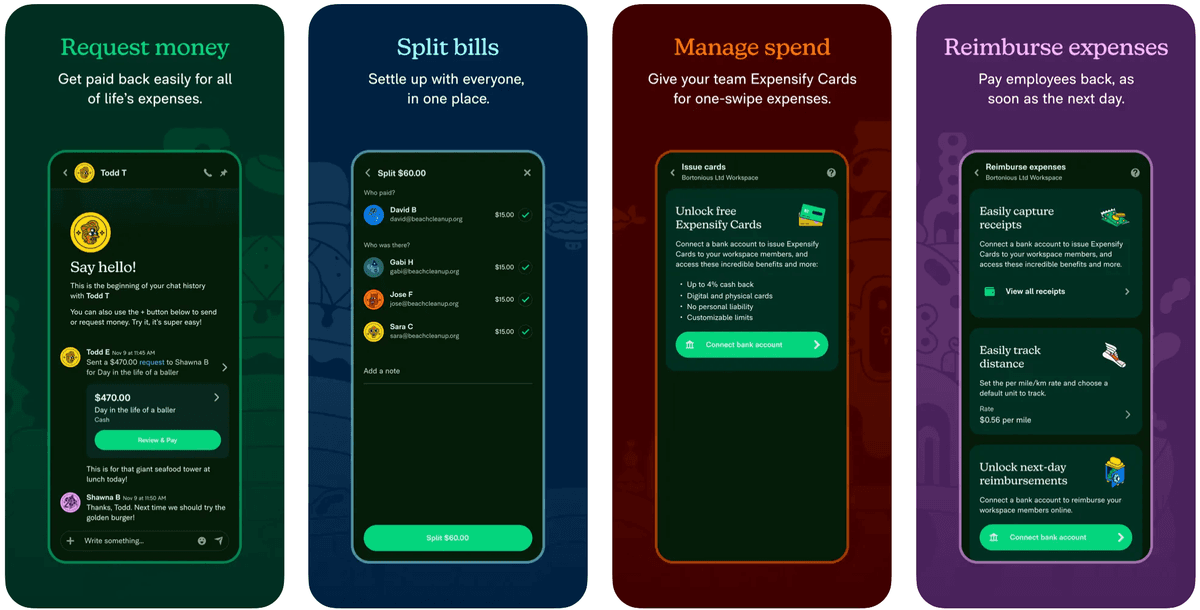
I offer ML consulting as a hands-on senior engineer, not a slide-deck strategist: feasibility studies, rescue work on underperforming models, and AI roadmaps that end in working prototypes. Engagements run $20K–$120K — short focused audits at the low end, embedded multi-month delivery at the top. I'm Top Rated on Upwork with $100K+ earned and verified client reviews, backed by 7+ years of production delivery including work as a Guest Engineer at Expensify. The deliverable is always something you can run and a decision you can defend, not a deck.
Most companies shopping for ML consulting don't need a model — they need a decision: whether the thing is feasible, what the cheapest credible path is, and what to build first. Good consulting ends with a running prototype, an honest cost estimate, and a roadmap your team can execute without me; bad consulting ends with a PowerPoint and a bigger question mark.
Weekly demos, async Slack updates, production standards.
04
Ship
Store launch, documentation, knowledge transfer.
Engagements this covers
Feasibility study before you commit real budget
A founder has data and a hypothesis — churn prediction, fraud flagging, smart matching — but no way to know if it will work. I run a two-to-four week study: baseline heuristics first, then a quick model on their actual data, then an honest verdict with numbers. Sometimes the verdict is 'yes, fund it'; sometimes it's 'a SQL query gets you 80% of this.'
Rescuing an underperforming model or AI feature
An AI feature shipped months ago and quietly stopped performing — or never performed and nobody could say why. I audit the pipeline end to end: training data, evaluation methodology, drift, and the gap between the metric being optimized and the outcome the business wants. The output is a ranked fix list, and usually I stay to implement the top of it.
An AI roadmap before you make your first ML hire
A company knows AI matters to their product but can't sequence it: build or buy, API or custom model, what to hire for. I map their use cases against effort and payoff, prototype the highest-leverage one, and define the first hire's actual job description. They start recruiting knowing what they need instead of hiring a title.
What ML consulting covers — and what it deliberately doesn't
Within scope: deciding whether a problem is an ML problem at all, choosing between frontier APIs and custom models, building evaluation frameworks so quality is a number, auditing existing pipelines, prototyping on your real data, and sequencing an AI roadmap against your actual constraints — team, budget, data maturity. Every engagement produces running code, because opinions about ML that haven't touched your data are worth roughly nothing.
Out of scope: research-grade novel model development, and anything I'd have to pretend to know. If your problem genuinely needs a specialist — speech synthesis research, robotics, frontier-scale training — I'll say so in the first call and point you toward the right kind of hire instead. The consulting fee buys judgment, and judgment includes knowing the boundary of my own.
The three engagement shapes
Audits run two to four weeks at the bottom of the budget range: I examine an existing system or a proposed plan, test claims against data, and deliver a ranked findings list with cost-to-fix estimates. Feasibility prototypes run three to six weeks: baseline first, then a real model or LLM pipeline on your data, ending in a numbers-backed go/no-go. Embedded engagements run two to four months toward the top of the range: I function as your interim ML lead — building the first production system, setting up evaluation and monitoring, and hiring or training the person who takes it over.
Most clients start with the smallest shape that answers their question. That's the right instinct, and I structure pricing so starting small doesn't penalize you if we continue.
What drives the price inside $20K–$120K
Three factors set the number. Scope of the question: 'is this feasible?' costs less to answer than 'build our first production ML system and train our team.' Data condition: if your data needs significant cleaning, joining, or labeling before anything can be tested, that work dominates the early weeks — it's unglamorous and unavoidable, and pretending otherwise is how projects blow their estimates. Delivery depth: a prototype plus recommendations sits mid-range, while production deployment with monitoring, retraining plans, and handover documentation reaches the top.
What doesn't drive price: model exotic-ness. The consulting instinct you're paying for usually pushes toward simpler, cheaper approaches — an API call with good retrieval, a gradient-boosted model on tabular data — because simple systems get maintained and clever ones get abandoned.
Mistakes companies make when buying ML advice
The most expensive mistake is hiring for research credentials when the problem is a product problem — a PhD in a narrow ML field is the wrong tool for 'should we use an LLM API for support tickets,' and you'll pay for months of exploration where a builder would ship in weeks. The second is accepting strategy without a prototype: any recommendation that hasn't touched your data is a hypothesis wearing a suit. The third is letting the consultant pick the success metric, which guarantees success on paper.
A subtler one: buying ML consulting to validate a decision already made. If the build is happening regardless of what the analysis says, skip the consulting and spend the money on evaluation infrastructure — it'll tell you the truth faster.
How to evaluate an ML consultant
Ask them to describe an engagement where they recommended against building — a consultant who has never said 'don't' is a salesperson. Ask what baseline they'd establish before any model work; the right answer names something embarrassingly simple, like a rule or a query, because a model is only worth what it beats. Ask how they'd hand off: you want evaluation harnesses, documentation, and a trained team member in the plan, not a dependency on the consultant.
Then check for shipping scars. Production ML experience shows up as opinions about monitoring, data drift, and what breaks at 2 a.m. — not as familiarity with the latest papers. For most companies, the consultant who has operated systems beats the one who has published about them.
When you don't need ML consulting
If you haven't tried the dumb baseline yet, do that first — a week of SQL, rules, or a plain API integration answers many 'do we need ML?' questions for free. If your product has no users yet, your priority is learning what people want, not optimizing predictions about behavior you haven't observed. And if the honest motivation is that the board wants an AI slide, a consultant can't fix that; the cheapest path there is a modest, real feature, not a strategy engagement.
Equally: if you already have a strong ML engineer who lacks only time, hire contract implementation capacity instead of advice. Consulting pays for itself when the risk is deciding wrong, not when the bottleneck is typing speed.
Low-risk to start
✓Fixed-scope proposal first
You approve milestones and a price before any build starts — no open-ended hourly surprises.
✓Working demos every week
You see running software each week, not status reports, so you can course-correct early.
✓One senior owner, no hand-offs
The person who scopes the work is the person who builds it — no junior layers, no agency markup.
✓A track record you can verify
Top Rated on Upwork with public client reviews and $100K+ earned, plus contributions to Expensify. Check the receipts before you commit.
Focused engagements with me run $20K–$120K: two-to-four week audits and feasibility studies at the low end, and multi-month embedded delivery — building your first production ML system and training a team to own it — at the top. Compare that against a bad build: a misdirected in-house ML effort routinely burns two to three times the top of that range before anyone calls it.
Should I hire an ML consultant or a full-time ML engineer?
Consult first, hire second. A consultant answers the questions that define the role — feasibility, build-vs-buy, architecture — in weeks, so your first full-time hire executes a validated plan instead of exploring on salary. Reversing the order is how companies employ an expensive engineer for a year and end up with prototypes. Often the consulting output is literally the job description.
How long does an ML feasibility study take?
Two to six weeks depending on data condition. If your data is accessible and reasonably clean, expect a baseline, a working prototype on your real data, and a numbers-backed recommendation inside a month. If the data needs assembling first, that adds weeks — and discovering that early is itself a finding worth the fee, because it re-scopes everything downstream.
How much does ml consulting services typically cost?
Projects typically fall in the $20K–$120K range depending on scope, integrations, and timeline. I provide a fixed-scope proposal after a 30-minute scoping call.
How long does a ml consulting services project take?
MVPs often ship in 8–12 weeks. Production systems with AI backends or RAG may run 12–20 weeks. Rescue and audit engagements can start within days.
Do you work with startups and enterprises?
Yes. I work with founders, CTOs, product teams, and agencies worldwide — US, UK, EU, and APAC time zones with async updates and weekly demos.
Can you own mobile and backend together?
Yes. I specialize in React Native + Python (FastAPI) + AI (RAG, agents, OpenAI/Claude) under one senior owner — fewer handoffs, faster shipping.
How do I get started?
Book a free 30-minute scoping call on this site, hire through Upwork, or email dhairyasenjaliya@gmail.com with your brief and timeline.