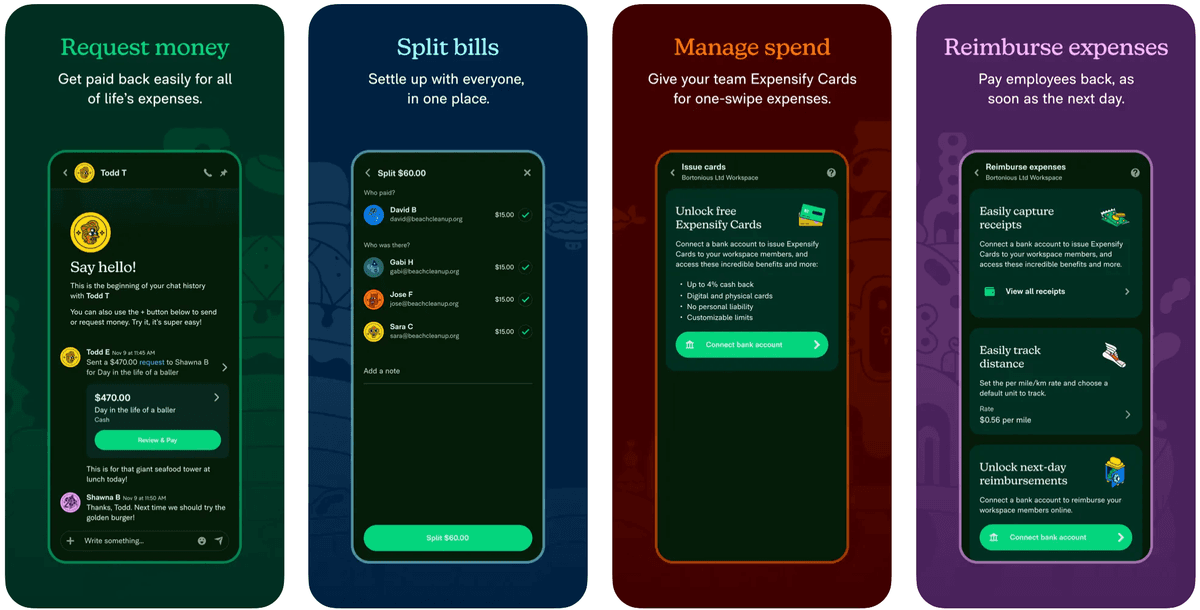
MCP development with me — building Model Context Protocol servers that let Claude and other AI assistants operate your product or internal systems — runs $15K–$80K depending on tool count, authentication, and how much write access the AI gets. I bring 7+ years of production delivery, work as a Guest Engineer at Expensify, and Top Rated status on Upwork with $100K+ earned and verified client reviews. Because MCP work is mostly careful API and security design, you are hiring judgment about what an AI should be allowed to do, not just protocol plumbing.
MCP is how AI assistants stop being chatbots and start operating your systems — reading your data, filing your tickets, running your workflows. The build succeeds or fails on tool design and permissioning: a server that exposes the right operations with the right guardrails, described so a model reliably picks the correct one.
Weekly demos, async Slack updates, production standards.
04
Ship
Store launch, documentation, knowledge transfer.
Engagements this covers
SaaS product that wants to be usable from AI assistants
Your customers increasingly live inside Claude and similar assistants, and you want your product available there before competitors are. I design and build a remote MCP server over your existing API — tools scoped to what assistants can safely do, OAuth for user identity, and documentation ready for directory listings. You ship an integration channel instead of watching one emerge without you.
Internal MCP server over company systems
Your team wants to ask an assistant questions that require your database, CRM, and internal APIs — without handing a model raw production credentials. I build an internal MCP server with read-scoped tools, per-user permissions, and full audit logging of every call. Staff get answers grounded in live company data; security gets a reviewable log instead of a shadow-IT integration.
Agent product that needs a reliable tool layer
You are building an agent, and its failures trace back to tools: vague descriptions, ambiguous errors, operations that are too coarse or too granular. I redesign the tool suite as an MCP server — clear contracts, error messages written for a model to recover from, and an evaluation harness that measures whether the agent picks the right tool. Reliability improves because the tools stopped fighting the model.
What MCP actually is, minus the hype
The Model Context Protocol is an open standard for connecting AI assistants to external tools and data — a common plug, so every AI client can talk to every integration without bespoke adapters. That part is settled and boring, which is exactly what you want from a protocol.
The part that is not boring is what you expose through it. An MCP server is a public statement of what an AI may do to your systems: which records it can read, which actions it can take, what happens when it is wrong. The protocol handling in a build like this is a small slice of the work; the bulk is deciding tool boundaries, writing descriptions a model interprets correctly, designing errors the model can recover from, and wiring authentication so the AI acts as a specific user with that user's permissions — never as an all-powerful service account.
Tool design is API design for a non-human consumer
A tool description is a prompt. The model chooses tools by reading names, descriptions, and parameter docs, so ambiguity that a human developer would resolve by reading your documentation becomes a wrong tool call in production. Granularity is the central design question: too many narrow tools and the model dithers between near-duplicates; too few broad ones and the parameters become a minefield.
Error design matters just as much. When a call fails, the error text is read by the model, which decides what to do next — so an unexplained internal-error message produces retry loops, while an error that states what was wrong and what valid input looks like produces a corrected call. I test every tool suite against real model behavior, not just unit tests, because the consumer of this API guesses, and the design job is making the right guess the obvious one.
What moves the price from $15K to $80K
A read-only server exposing a handful of well-documented endpoints from an existing API sits at the low end — a few weeks of work including testing against live assistants. Costs rise with write access, because every mutating tool needs confirmation flows, undo strategy, and abuse analysis. OAuth and multi-user identity add real work: token exchange, scope mapping, and session handling across the protocol. Multi-tenant deployments — one server safely serving many customer organizations — add isolation and rate-limiting concerns.
The final driver is evaluation depth. If assistants acting through your server can affect customers or revenue, you want a harness that replays realistic conversations against the tool suite and scores outcomes, running before every release. I will tell you in scoping which of these your use case genuinely needs and which you can defer — a read-only pilot is often the right first purchase.
Security questions to settle before you build
An MCP server is an attack surface with a gullible client. Prompt injection is the defining risk: if a tool returns content that came from the outside world — a ticket body, an email, a web page — that content can contain instructions the model may follow, so tool results need treating as untrusted input and the blast radius of any single conversation needs capping. Least privilege is non-negotiable: the server acts with the calling user's permissions, destructive actions require explicit confirmation, and everything is logged with enough context to reconstruct what the AI did and why.
I put these controls in the design document before writing code, and I recommend read-only launches for a first release in most organizations. Expanding scope after a month of clean audit logs is easy; recovering trust after an AI deletes something is not.
When not to build an MCP server yet
If your underlying API is unstable — endpoints still churning weekly — building an MCP layer on top just doubles your maintenance. Stabilize the API first. If nobody in your customer base or team actually uses AI assistants yet, a server is a bet on adoption; a cheaper probe is instrumenting demand before building supply.
And if your need is one internal workflow for a few people, a simpler integration inside a single assistant may be all you require — MCP earns its keep when you want one integration serving many AI clients, or when governance and auditability matter. I have talked buyers down from $60K builds to $15K pilots in scoping calls; the pilot that proves usage is a better purchase than the platform that assumes it.
Low-risk to start
✓Fixed-scope proposal first
You approve milestones and a price before any build starts — no open-ended hourly surprises.
✓Working demos every week
You see running software each week, not status reports, so you can course-correct early.
✓One senior owner, no hand-offs
The person who scopes the work is the person who builds it — no junior layers, no agency markup.
✓A track record you can verify
Top Rated on Upwork with public client reviews and $100K+ earned, plus contributions to Expensify. Check the receipts before you commit.
$15K–$80K with me. A read-only server over an existing, well-documented API lands near $15K–$25K. Write-capable tools, OAuth user identity, multi-tenant deployment, and a conversation-level evaluation harness each add meaningfully, and the full combination reaches the top of the range. Scoping produces an itemized quote, and I often recommend starting with a read-only pilot.
How long does MCP development take?
A focused read-only server typically ships in three to five weeks, including testing against real assistant behavior. Write actions, OAuth, and multi-tenancy stretch that to eight to twelve weeks. The long pole is rarely the protocol — it is deciding safe tool boundaries with your team and validating that models actually use the tools correctly under realistic conversations.
Should my company build an MCP server or wait?
Build now if customers or staff already use AI assistants and are asking to reach your product from them, or if unofficial integrations are appearing anyway — governance beats prohibition. Wait if your API is unstable or assistant adoption around you is still hypothetical. A middle path I often recommend: a small read-only server as a demand probe, expanded only when usage data justifies it.
How much does mcp development services typically cost?
Projects typically fall in the $15K–$80K range depending on scope, integrations, and timeline. I provide a fixed-scope proposal after a 30-minute scoping call.
How long does a mcp development services project take?
MVPs often ship in 8–12 weeks. Production systems with AI backends or RAG may run 12–20 weeks. Rescue and audit engagements can start within days.
Do you work with startups and enterprises?
Yes. I work with founders, CTOs, product teams, and agencies worldwide — US, UK, EU, and APAC time zones with async updates and weekly demos.
Can you own mobile and backend together?
Yes. I specialize in React Native + Python (FastAPI) + AI (RAG, agents, OpenAI/Claude) under one senior owner — fewer handoffs, faster shipping.
How do I get started?
Book a free 30-minute scoping call on this site, hire through Upwork, or email dhairyasenjaliya@gmail.com with your brief and timeline.